New CDL holders can look at winter driving as a different exercise of normal truck driving instead of being a colder version of it. This is another operating environment with different modules, less margins, and decision rules that do not exist in warm weather. Many crow drivers who earned a commercial driver’s license recently make the mistake of severely underestimating how sharply winter road conditions alter traction, braking distance, and what even minor errors can do. Safe driving in winter conditions using a significant amount of water is not equal to which you all learn and acquire during dry seasons, especially for heavy commercial vehicles.
Truck safety in winter begins with understanding that normal habits do not apply once traction is reduced.
Look at the CDL holder, winter driving constantly presents the challenge of finding a delicate balance between speed reduction, following distance, braking technique and the most important, yet tough judgement call: the go or no-go decision. Just as truck driving tips often stress not to drive fast, it is not right to condense winter safety to speed only. Trucks are not like passenger cars to lose traction, and when on icy tracks traction has been lost, whatever the level of expertise is, the restoring chances are quite slight.
Go/no-go decisions define whether a situation remains manageable or escalates into a loss-of-control event.
Winter road conditions always influence the wheel’s working surface, that is to say, adding or multiplying the friction between them and the road mark. Snow, slush, freezing rain, black ice, and packed ice all affect traction in different ways. A surface that seems as if it is wet could actually be frozen. Bridges, overpasses, shaded spots, and low ground points are the ones that freeze first and stay icy long. For CDL winter driving, it is just as important to know where traction goes as it is to recognize when it goes.
Reducing speed early helps preserve traction before conditions deteriorate.
Truck Drivers – Winter Driving Safety Tips
Winter Surface Conditions That Affect Traction
- Snow
- Slush
- Freezing rain
- Black ice
- Packed ice
The first step of winter driving safety is speed reduction, yet it cannot be the whole solution. Reducing speed not only increases the reaction time, but also limits the force going into a slide, but it does not ensure control. Black ice for example, at very low speeds, can cause you to lose traction at corners or while braking. New CDL drivers will need to figure out that their winter’s speed is not a number shown on the speed indicator but a response changing all the time to the road surface, atmosphere, lighting and so on.
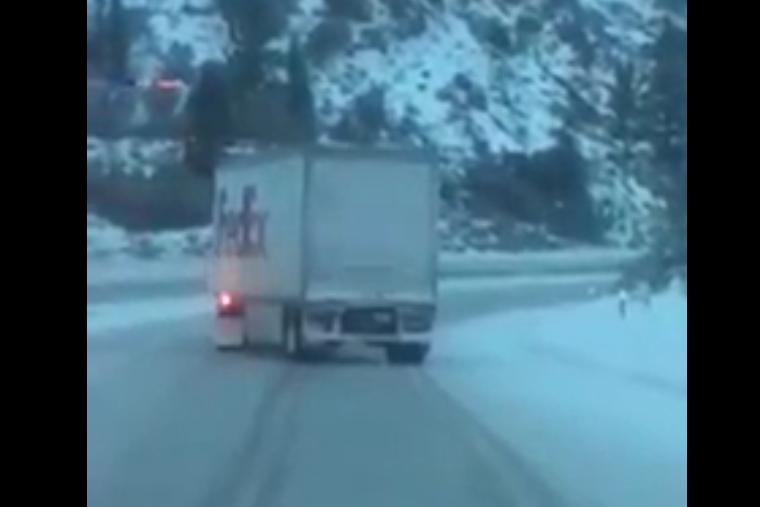
To reduce speed correctly means adjusting constantly, not locking into one “safe” number.
A truck traveling at a safe speed one mile can be moving too fast and the next. This proves how smart veterans are; they are constantly re-checking instead of just setting it once. Going down slower is much better than pressing the brakes too late. The stopping distance is always higher when the traction is less in winter. A slight increase in speed may double the braking distance in icy roads.
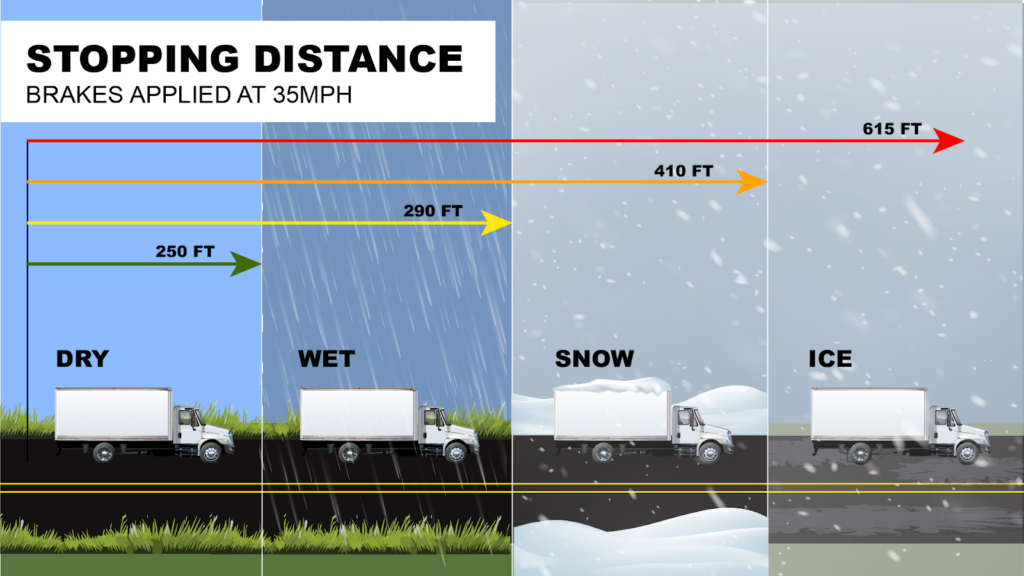
Reducing speed proactively protects braking distance long before a hazard appears.
Speed, Traction, and Braking Distance in Winter Conditions
| Condition | Traction Level | Braking Distance | Error Recovery |
| Dry pavement | High | Short | Possible |
| Wet pavement near freezing | Medium | Increased | Limited |
| Packed snow | Low | Long | Very limited |
| Black ice | Minimal | Unpredictable | Nearly impossible |
The distance behind becomes the main safety space during driving trucks in winter. In dry conditions, the following distance is important. In winter, it is essential. Braking distance on snow or ice can change from few times to many times bigger than on dry pavement. This means that a following distance that feels excessive in normal weather may barely be adequate during snow driving or icy road conditions.
Keep distance to preserve reaction time and prevent panic braking.
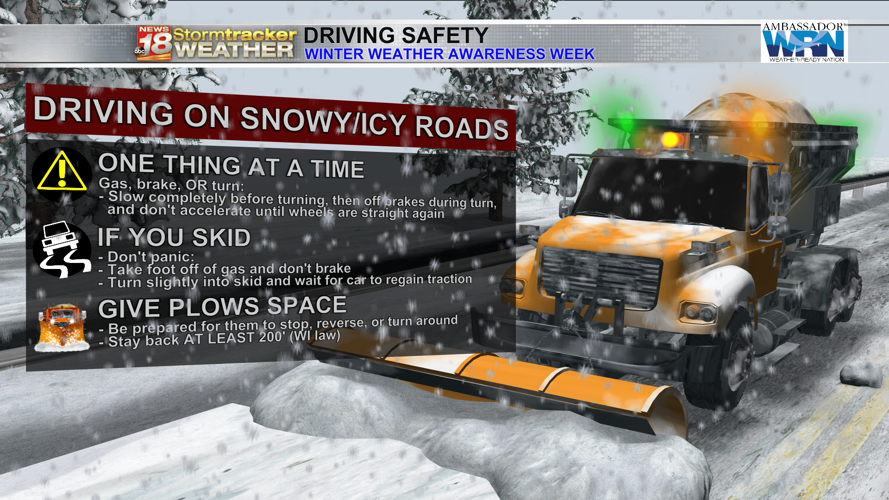
Keeping distance is not about comfort or courtesy. It is all about keeping choices open. When there is a distance the driver can slow down gradually, avoid panic braking and react well to the traffic changes. But with the gap missing, braking will be done as a reaction which raises the likelihood of a jackknife guillotine or a loss of control. For the new CDL holder, learning to distance even when other drivers cut in is one of the hardest but most important winter habits. Truck safety margins shrink immediately when following distance disappears.
Why Following Distance Matters More in Winter
- It allows gradual slowing instead of panic braking
- It preserves choices when traffic changes suddenly
- It reduces the likelihood of jackknife or loss of control
- It compensates for extended braking distance on ice
Braking distance has often been a confusion point for new drivers. Many people think that putting more pressure on the brakes means that stopping will happen quicker. Most winter conditions create situations like that. Braking hard can cause your wheels to lock or the ABS to kick in which, instead of shortening, might extend your stopping distance. A gentle, late braking along with early speed reduction is far more efficient on slippery surfaces.
How to Drive a Semi in the SNOW!
Reducing speed earlier always matters more than braking harder later.
Stopping safely at winter time hinges more on anticipation than reaction. Drivers should start decelerating a lot earlier than they would under dry conditions. This includes not only traffic lights and stop signs but also curves, downgrades, and congestion. In icy roads, braking late is often unrecoverable.
Truck safety depends on planning the stop before it becomes urgent.
Another area where new CDL holders can have difficulties with winter driving is engine braking, commonly known as jake brake. The engine brake can be efficient when controlling speed on dry pavement, but it can be risky on slippery roads. Hard braking of the engine can lead to the insecurity of the drive wheels when the brake is set too high or is turned on abruptly.
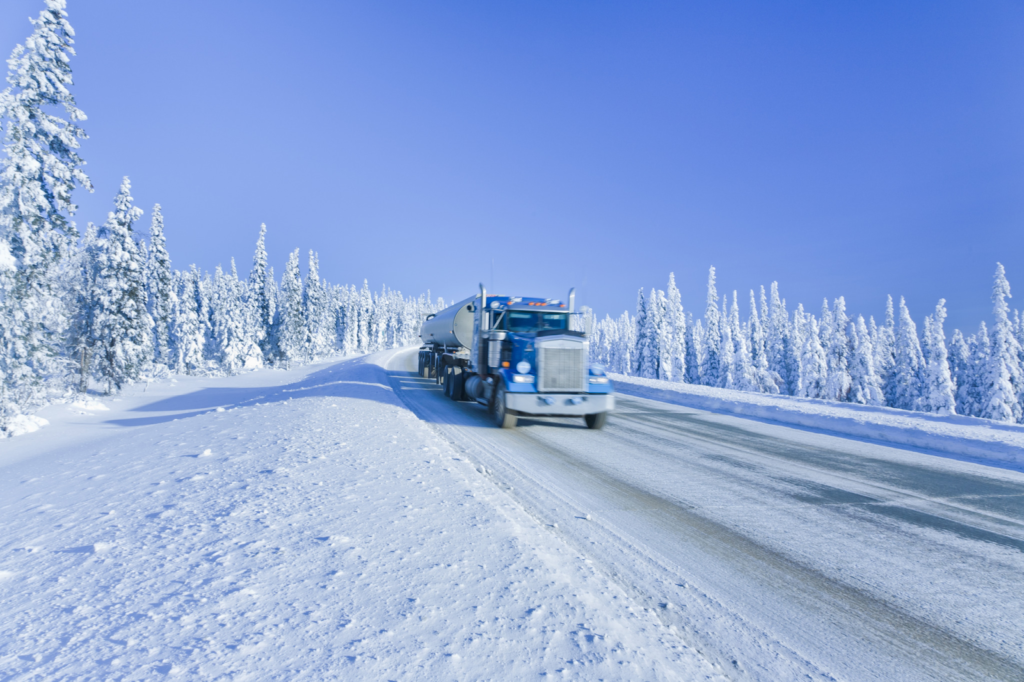
Reducing speed before grades minimizes reliance on engine braking.
In winter conditions, many fleets recommend disabling in whole or reducing the engine brake as long as traction is in a dilemma. If used, it should be set to the lowest level and applied smoothly. Besides, it should not be used as the primary way of slowing down as it may cause ice to build up. Keeping the wheel turning is more critical than going at a specific speed.
Truck safety improves when traction is protected instead of forcing deceleration.
Black ice is one of the most dangerous risks during winter as it can be invisible. It forms when water freezes on the street, especially during the change of seasons. Bridges, overpasses, shaded curves, and areas near bodies of water are where it is commonly formed. A driver usually is unsure he is on black ice till the steering and braking fail to give the feedback.
Go/no-go decisions become critical when black ice is widespread.
For a new CDL holder, knowing the conditions contributing to black ice is more beneficial than being able to see it. Wet pavement or sometimes air is close to freezing, tire noise is absent, and strange behavior from the vehicles ahead can all be the sign. When black ice is on the surface, the driver already should reduce the speed and all actions must be smooth and minor.
Reducing speed before traction loss is the only reliable defense.
Another winter-related danger that is often a source of overconfidence for many is hydroplaning. Slush and melting snow can create standing water conditions like the ones that happen in heavy rain. At high speeds, it may ride on water or slush instead of gripping. Hydroplaning leads to loss of magnanimity steering and braking.
Reducing the speed is the best thing to do to avoid hydroplaning. Once hydroplaning starts, breaking or turning sharply makes things worse. The CDL drivers need to understand that old tires significantly increase the chance of hydroplaning, hence the need for pre-trip checks to ensure that the tires are in good condition for winter.
Truck safety relies on traction, not reaction, once hydroplaning begins.
Of all the skills needed for CDL winter driving, one of the most valuable is the ability to make the right go or no-go decisions. You could have all the experience and confidence in the world because, in the case of physics they do not help at all. The time when you should not drive at all is of course the most professional and safe decision to make.
Go/no-go decisions protect the driver, the equipment, and the license.
Go / No-Go Decision Indicators in Winter Driving
| Condition Observed | Risk Level | Recommended Action |
| Predictable traction and visibility | Moderate | Proceed cautiously |
| Intermittent ice and snow | High | Reduce speed and reassess |
| Widespread black ice | Critical | No-go decision |
| Unpredictable braking response | Critical | No-go decision |
| No safe stopping locations | Critical | No-go decision |
The new CDL holders often feel the pressure to keep the traffic moving. This pressure may come from dispatch, schedules, financial concerns, or fear of appearing inexperienced. Nevertheless, the winter weather rules and the CDL manuals bond that the drivers should operate their vehicles only when the conditions are safe. Driving through heavy conditions which make the stopping distance more is not serious work; it’s just risking.
Truck safety rules always override schedule pressure.
The no-go decision is very good in cases that ice are everywhere, visibility is bad, braking distance becomes unpredictable, and safe stopping options are scarce. Expected won’t be improved means, as a result, driving increases the risk without productivity increase.
Reducing speed cannot compensate for missing safety margins.
Refusing to drive is not a failure. It shows that there are no more safety margins. Communicating and documenting conditions is a good defensive way for both the drivers and their commercial driver’s license.
Go/no-go decisions are part of professional truck safety behavior.
Situations Where No-Go Decisions Are Appropriate
- Ice is widespread across the route
- Visibility is poor
- Braking distance becomes unpredictable
- Safe stopping options are scarce
Safety in winter trucks lies in traction management. Recovering from loss of traction is tough and you know it. That’s why swapping the remedial reaction for the pro-active pre-planning is the key to driving in the winter. Right steering, soft braking, and gradual acceleration all are designed to maintain the grip. Sudden movements will be detrimental.
Keep distance and reduce speed together to preserve traction.
Visibility on the slippery road is a big argument for lane discipline. Built-up snow between lanes, ridges of ice, and uneven pavement are the reasons that destroy the lateral traction. Unnecessary lane changes should be avoided and rather be done at a crawl. Always try straight-line braking before you brake while turning.
Truck safety improves when lateral traction is preserved.
Safe stopping is not just about braking technique. It also involves making the right decision about where and when to stop. New CDL drivers should mark down stop and rest areas, truck stops, and places where they can safely pull off instead of just waiting for bad weather to force them to stop. Parking on a level ground is a good plan to minimize the chance of sliding.
Go/no-go decisions apply to parking just as much as to driving.
Winter driving for a fresh CDL holder is mainly a matter of self-control and not proving a point. Refraining from speed, following distance awareness, controlling braking, engine braking cautiously, being aware of traction, and discipline in go or no-go decisions together create a single safety system. Carelessness in any one element could badly affect the whole system.
Truck safety is a system, not a single technique.
The most useful winter skill is learning when your margin of safety is exceeded and having the self-control to stop. Protecting your license, your equipment, and your future in trucking is worth more than finishing any single trip.