Winter OTR is not merely a long-haul trucker with lower temperatures. It is a different operating environment fundamentally where planning mistakes amplify, margin decreases, and choices that are minor in summer can be at the end of the trip. For an over-the-road truck driver, winter is not a simple time of the year — it’s an examination of how much they can plan.
In commercial trucking, winter planning defines whether a trip remains controlled or becomes reactive.
This shift places winter roads and cold weather driving at the center of every safety decision.
A lot of winter events that drivers become victims of are not because of the skill drivers lack, but instead, the process of trips is initiated without a structured Winter OTR planning process. Weather forecasts are superficially checked, travel code windows are assumed rather than defined, and secure stopping points are regarded as emergency options instead of being planned premises. However, when conditions turn — and they invariably do in winter — the driver is left only to respond instead of executing.
This gap between reaction and execution directly affects trucking safety and long-term OTR safety.
This article highlights a typical Winter OTR planning framework which is built on the three-main pillars: forecast analysis, travel windows, and safe stopping points. The three of them are forming a planning system which promotes truck driver safety, protects the equipment, and preserves productivity while traveling in winter.
Why Winter OTR Needs a Different Planning Mindset
Unlike in warm seasons, many OTR runs can be successful with loose planning, but that is not true for winter. Roads may be pass-able, daylight long, and there are a vast number of routes out. The winter keeps those cushions at bay.
Winter roads reduce safety margins and increase exposure with every mile driven.
On the other hand, winter roads command tighter safety standards due to ice and snow issues like longer stopping distances means lower reaction time. Weather systems are often faster than long-haul trucks move. A forecast that looks good in the morning can change to a bad one in the afternoon in a distance of many hundred miles. In cold weather driving according to the distance you drive every mile increases your exposure, and every hour without a plan narrows your options even further.
Driving safety during winter travel depends more on planning discipline than on driving skill alone.
Winter planning is not driving absolutely avoiding driving. It is about controlling when, where, and under what conditions driving happens. FMCSA advises CMV drivers to reduce speed for conditions and to pull off the road if the vehicle can no longer be safely controlled on slick or icy roads – Click
Step One: Forecast as a Planning Tool, Not a Yes-or-No Answer
Winter Driving Safety: Introduction
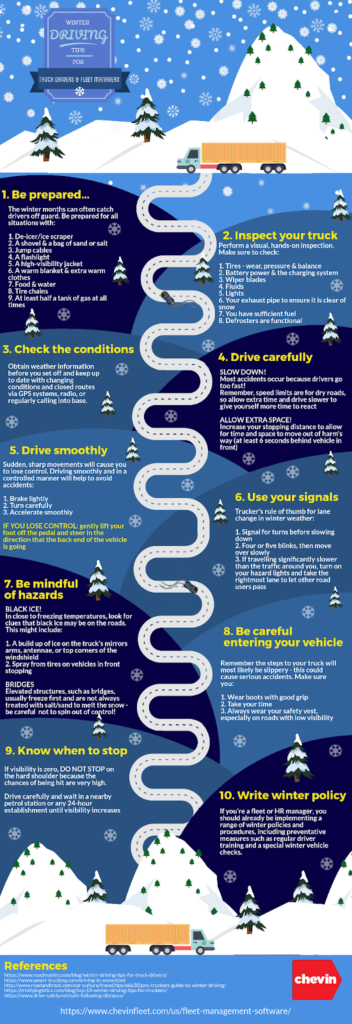
One of the most common mistakes in winter planning is to treat the weather forecast as a simple green-light or red-light decision. In Winter OTR, forecasts are not permissions — they are risk maps.
An accurate OTR forecast must be treated as a moving variable, not a static approval.
The correct way to do an OTR forecast review is to include:
- Timing, not just conditions
- Geography, not just your starting location
- Trend direction, not current status
If the snow starts six hours into the trip, it will be much more dangerous than the snow that is already falling at departure. In a way, temperatures around freezing have more effect than heavy snow in deep cold because of black ice formation. Wind forecasts are crucial for empty or lightly loaded trailers on open winter roads.
Weather forecast interpretation is one of the most critical elements of winter planning.
Professional winter planning is the same as reading forecasts along the route instead of at origin and destination. For example, a mountain detour could be plagued by earlier blizzards, while a shaded secondary highway is sure to remain passable during the same weather.
Forecast analysis should answer three questions:
- Where will the situation be worse?
- When will the situation be that way?
- What can be done before the situation is that way?
Winter OTR Forecast Interpretation
| Forecast Element | What Drivers Often See | What It Actually Means for Winter OTR |
| Light snow | “Roads still open” | Reduced traction + compaction risk |
| Temperature near 32°F | “No extreme cold” | High black ice probability |
| Wind advisory | “Manageable conditions” | Trailer instability, drifted snow |
| Overnight freeze | “Morning issue only” | Refreeze during night travel windows |
| Storm moving east | “Will pass quickly” | Deterioration later along the route |
Step Two: Defining Travel Windows Instead of Driving “All Day”
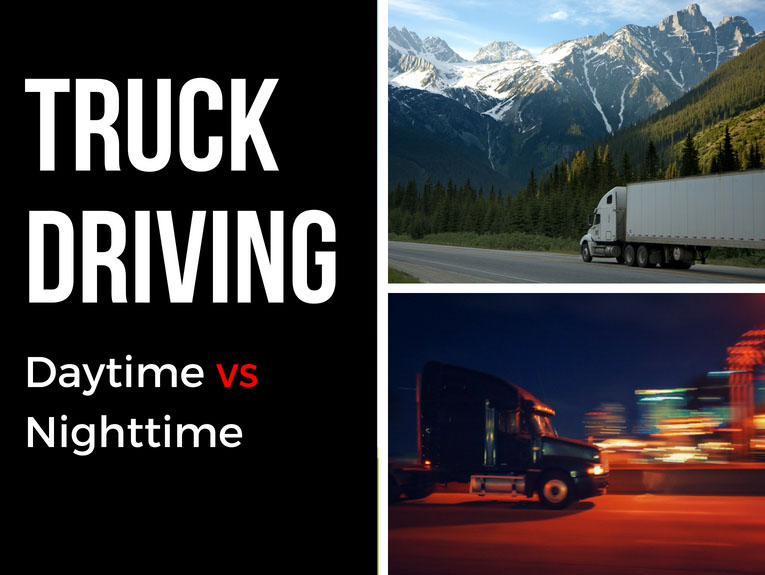
Making the right call in winter OTR, total miles becomes less so. A travel window is a specific time range when road conditions, visibility, traffic flow, and recovery options align in your favor.
Clearly defined travel windows reduce uncertainty during winter travel.
Winter travel windows are determined by:
- Length of the day
- Overnight temperature drops
- Snowplow schedules
- City traffic density
- Wind on open roads
In the winter, when the sun is out and it is warm, it is not the same as when it is midnight and cold outside. At night after the sun has set temperatures drop rapidly, moisture refreezes, and traffic patterns shift. The majority of the winter accidents occur not on the days which are “quiet” but during these same nights when people think the roads are clear and there is no traction.
Managing travel windows is a core component of trucking safety in winter.
Wintertime travel window is the concept of driving aggressively during good weather windows and stopping intentionally when windows close. This method enhances trucking safety yet without losing any efficiency.
The travel window strategy/bat-sword cuts without causing the two:
- Reducing exposure hours
- Avoiding pushing through worsened conditions
- No risk during low visibility
Step Three: Safe Stopping Points Are Part of the Plan, Not a Failure
❄️ Winter Driving Tips for Truckers: Stay Safe on Icy Roads!
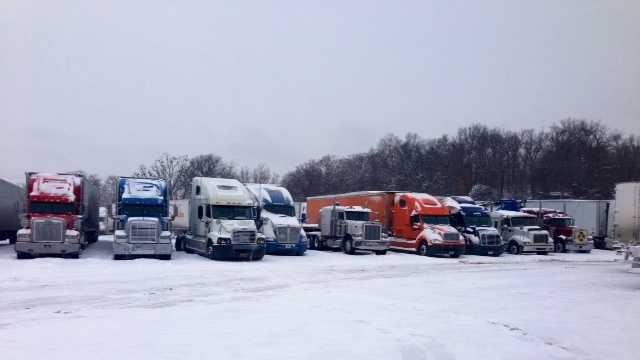
Safe stopping points are usually emergency roads: where you might divert only when things go to unbearable levels. The mentality in such cases while planning winter OTR is very risky.
Safe stopping points must be treated as a planned element of OTR safety, not an emergency fallback.
Safe stopping points need to be planned by the driver before leaving. They are not disabilities; they are strategic organs.
A well-daytime plan of parking includes:
- Truck stops that are accessible in winter
- Rest areas on flat grounds
- Service plazas that have clearance for the night
- Lanes with wide area to park out of traffic lanes
Safe stopping is not just about parking. It is about where you can stop without creating additional risk. When you park your vehicle on a shoulder or a ramp and there is snow or ice on it, you increase the likelihood of sliding or being struck by traffic.
Safe stopping directly supports truck driver safety during winter operations.
The incorporation of stopping points in the plan turns a reactive decision into a controlled maneuver.
Planned Stop vs Forced Stop in Winter OTR
| Factor | Planned Safe Stopping | Forced Stop Due to Conditions |
| Driver stress | Low, controlled | High, reactive |
| Parking surface | Level, cleared | Shoulder, ramp, uneven |
| Traffic exposure | Minimal | High |
| Equipment risk | Preserved | Elevated |
| Impact on schedule | Predictable delay | Cascading disruption |
| Safety outcome | Controlled | Uncertain |
Route Planning Through a Winter Safety Lens
Route planning in the winter is not about the shortest distance at all. It is all about predictability and recovery.
A road with a longer distance that is:
- Consistent with elevations
- Regular in provided services
- Well-maintained
may be a safer option than a shorter route with several steep grades or a road that is isolated.
Winter roads reward conservative route planning over aggressive shortcuts.
Winter routing takes the following priorities:
- Avoiding passes that are unnecessary mountains
- Reducing the exposure to wind corridors
- Staying around populated service areas
- Cutting back on secondary road use
Conservative routing receives more rewards than the aggressive shortcut during winter commercial trucking.
Pre-Trip Planning Is Where Winter Trips Are Won or Lost
Pre-trip planning in winter is not only a vehicle inspection. It is also a mental and logistical preparation stage.
Effective pre-trip planning methods are:
- Confirming the timing of the forecast
- Revisiting the travel windows
- Marking the safe stopping points
- Adjusting the delivery expectations
- Communicating any contingencies
Pre-trip planning aligns winter travel expectations with real road conditions.
The safety of truck drivers is significantly improved when proper expectation is matched before the trip starts. What that means is that things such as dispatch pressure, customer deadlines, and personal financial concerns must be weighed before wheels roll.
The winter OTR planning is about making a call in advance, deciding when you want to stop.
Managing Road Conditions as Dynamic Variables
Road conditions in winter are unpredictable. A road that is secure at noon might not be traversable at the evening. The snow removal, traffic compaction, and temperature constantly changing result in unforeseen traction.
Drivers should be on the lookout for:
- Tire feedback
- Steering response
- Brake performance
- Vehicular spray patterns
Driving safety in winter depends on early recognition of traction changes.
The first intimation of change is often the loss of consistent feedback. Looking for visual proof can be too late.
The OTR safety in winter very much depends on the early recognizing of the slight signs that something has went wrong.
The Role of Forecast Updates During the Trip
The winter forecast does not stop at departure. The key to success is mid-trip updates.
Drivers ought to check again:
- Temperature changes
- Wind advisories
- Storm speed alterations
- Road closures
Updating the weather forecast mid-trip allows adjustments that preserve OTR safety.
You should also check with us updating your mid-trip contract which allows for changing travel windows.
Mental Fatigue and Quality of Choice in Winter OTR
Cold weather conditions lead to mental exhaustation. It pushes concentration to the maximum just because of the little margin there is. This also affects judgment much before the driver feels tired physically.
Cold weather driving increases cognitive load and decision fatigue.
Winter planning procedures that guard decision quality do so by:
- Lessening the hours of exposure
- Making planned rest points
- Decreasing time pressure
- Removing the urgency from stopping decisions
Proper winter planning is as much about the health of the driver as it is about the truck.
Safe Stopping as a Productivity Strategy
Stopping early often feels unproductive. However, the fact remains that unplanned stoppages which are caused by accidents, closures, or mechanical stress are far more expensive.
A controlled stop:
- Prevents damaging the equipment
- Allows keeping the license in good standing
- Protects against further loss of income
- Stops the domino delays
Safe stopping is a productivity tool within winter OTR planning.
Winter OTR helps those drivers who consider stopping not a setback but a strategic pause.
Building a Repeatable Winter OTR Procedure
The best drivers in winter do not just rely on their instincts. They carry out a repeatable set of planning steps:
- Check for the changing forecast
- Define travel windows that are realistic
- Identify more than one safe stopping point
- Choose a conservative route
- During the travel, they keep resetting their mind
A repeatable OTR procedure strengthens trucking safety across the entire winter season.
This cycle lessens uncertainty and enhances security during all winter seasons.
Final Thoughts: Planning Is the Real Winter Skill
Winter OTR is not about doing a courageous or an endurance test. It is all about the rigor planning is.
Monitor the forecast, control the travel windows and plan the safe stopping points and winter will become a manageable operation instead of something reactive. The truck driver safety is not because of the risks that have been removed but because they are anticipated.
OTR safety in winter is achieved through structure, not pressure.
In winter, the trucking profession is more about the smart planning than the persistent hard work.