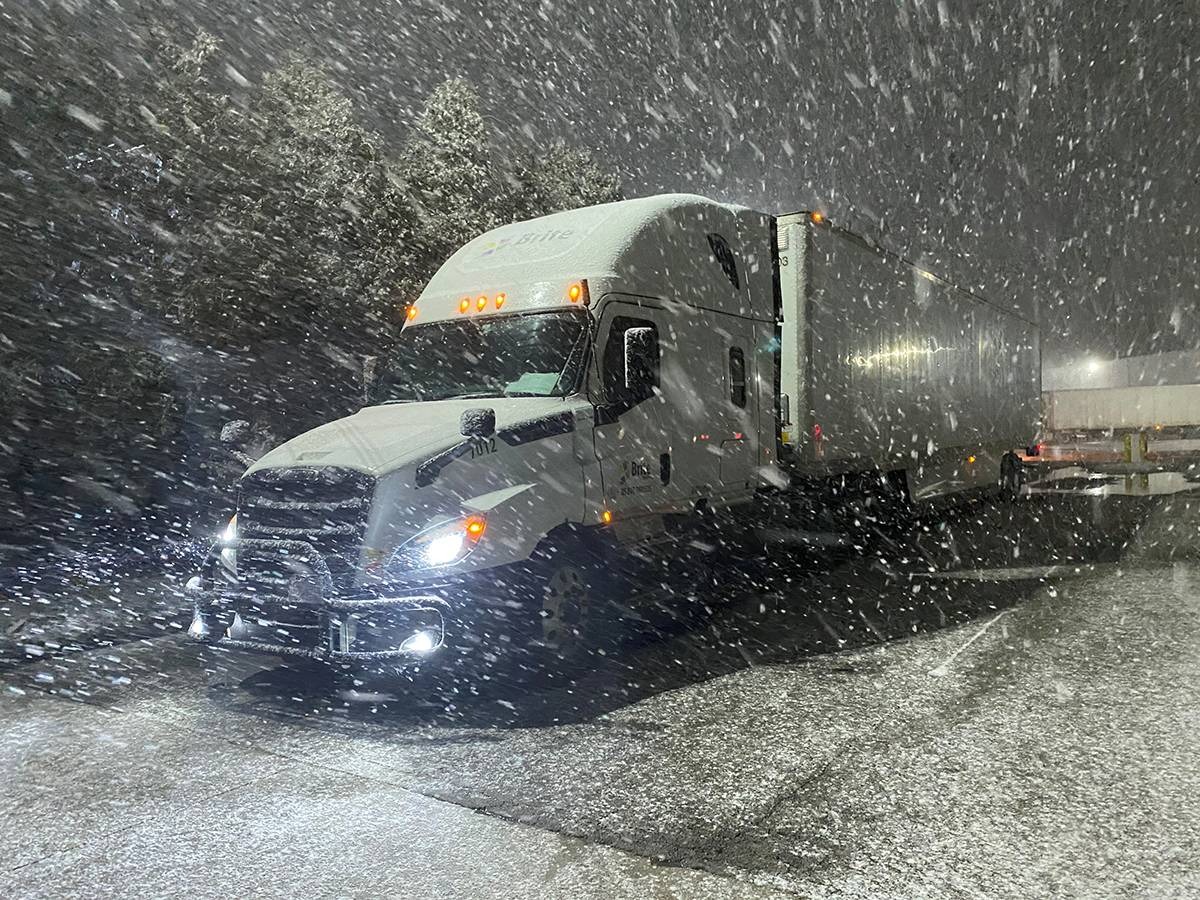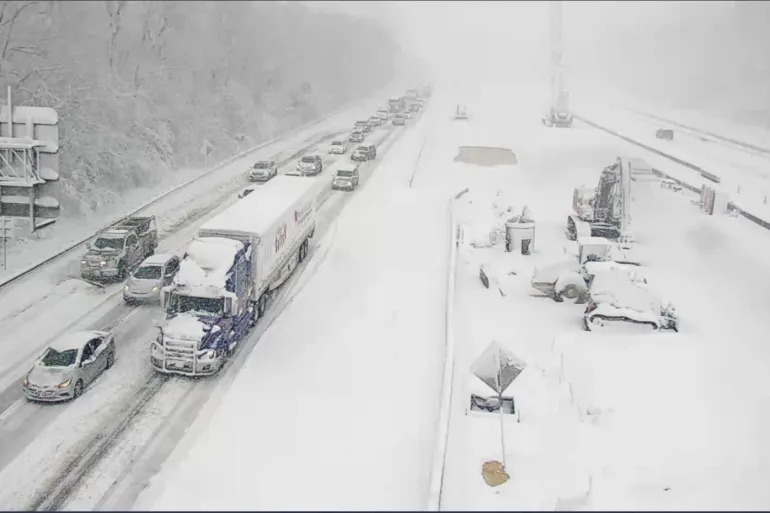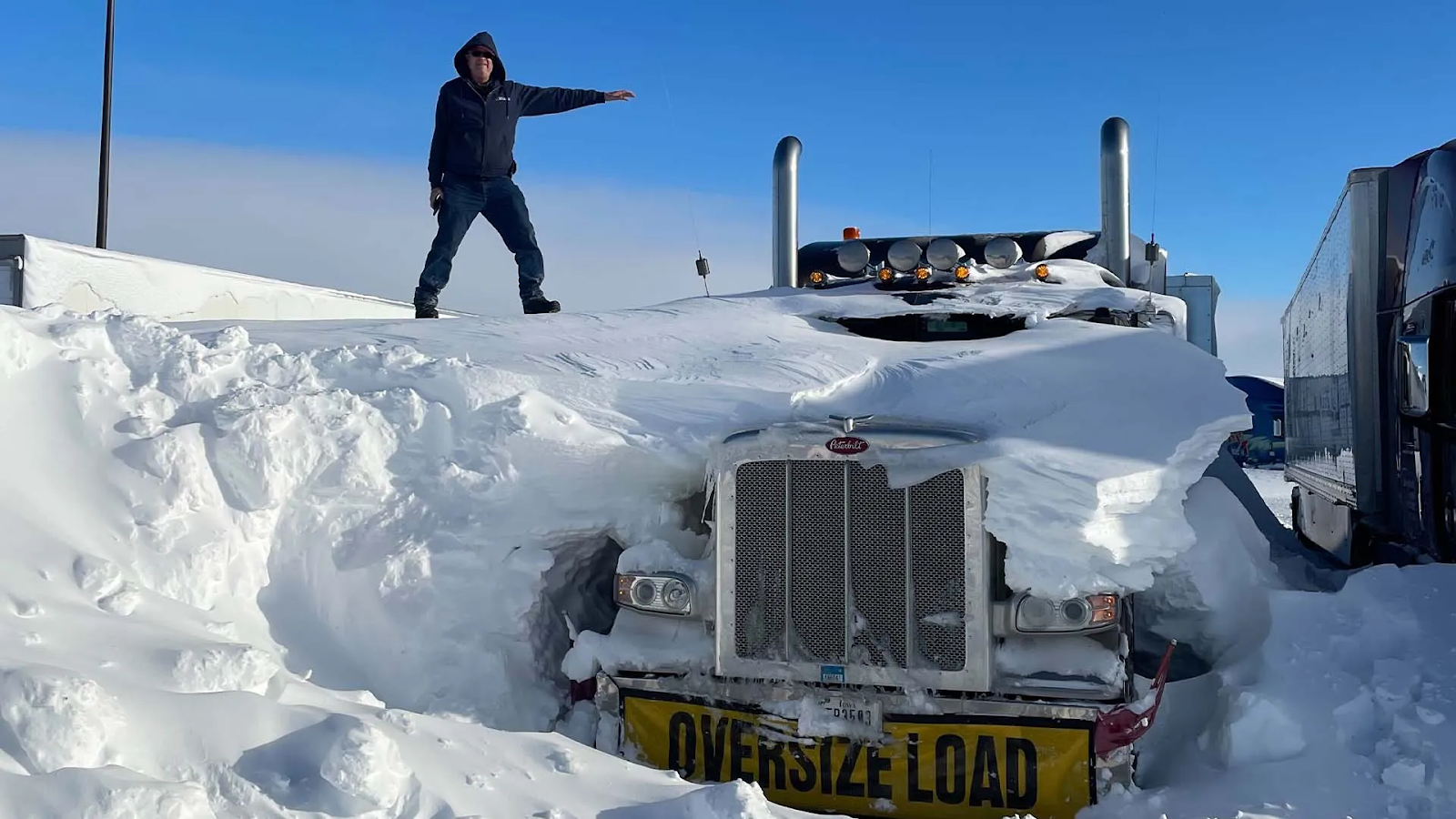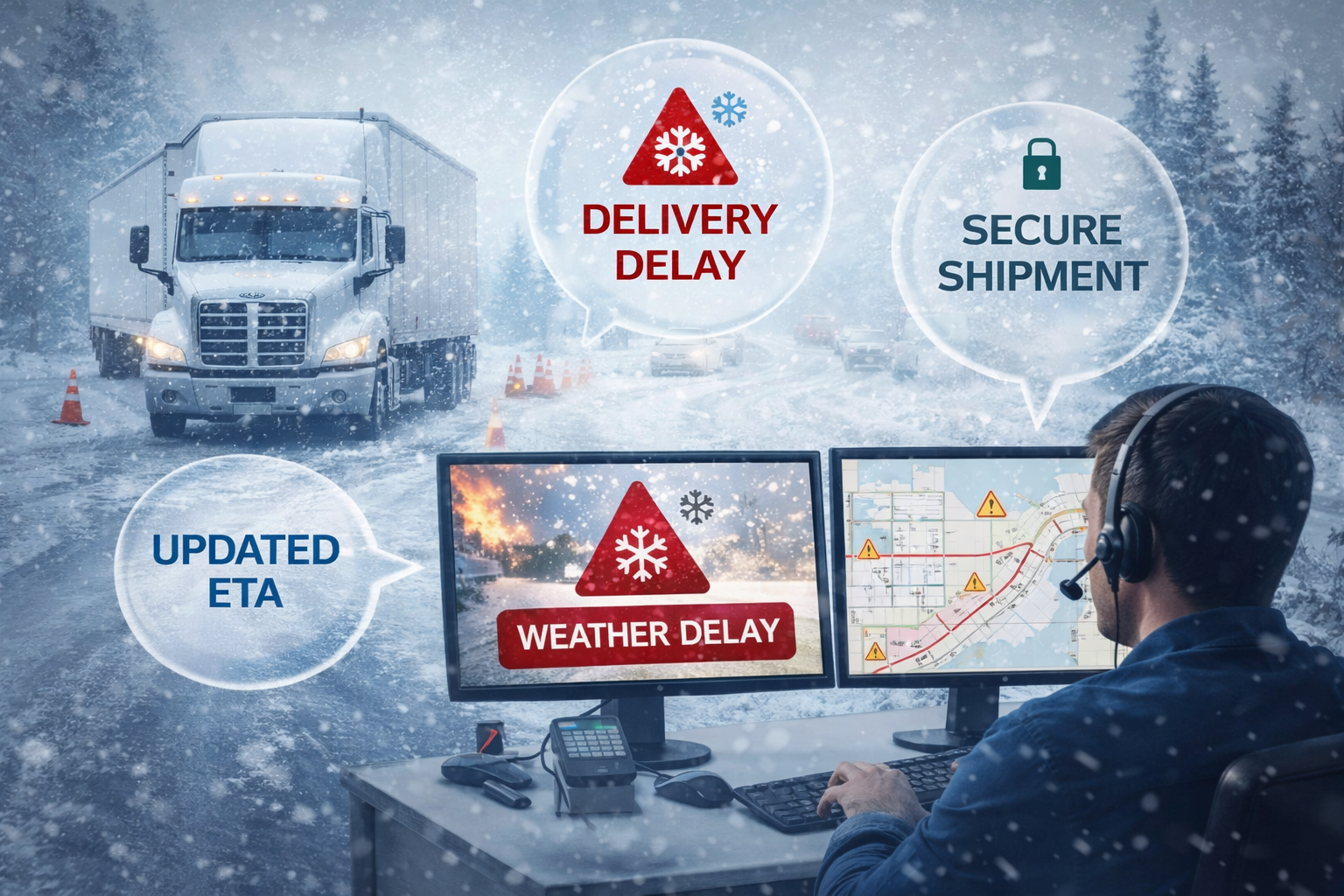
Weather is the one uncontrolled event in freight transport whose impact no one can plan for. Operations can be planned, paths can be calculated, and drivers can be trained but the elements such as snow, rain, wind, and floods are indifferent to human efforts. The way a company communicates can either make a weather delay an inconvenience that can be managed or a service disruption that is widespread, which is mainly determined by the personnel who do the communication.
Logistics companies with late shipments due to adverse weather are often unavoidably subjected to perennial issues but obviously not the customers’ confusion, frustration, and loss of trust. Confusion, frustration, and loss of trust are a significant part of transporting goods under difficult road conditions. Sending clear messages in a timely manner to customers and dispatchers serves like a countermeasure to the instability of operations when they are imposed by a faster rate of change in the road conditions than in the revised routes.
The article presents practical message templates that have been adopted in real trucking companies to notify about the delivery delays due to very low visibility, road changes due to construction, and thus the need for maintaining safety. It is the intention of this publication not to over-promise or to provide unending justification, or hide behind non-descript alerts but to keep the communication down to earth, believable, and calm.
Weather Delays Demand Formal Communication
Usually a weather delay is not just a delay. It also disturbs dispatch allocation, driver hours, and customer inventory, and in some cases, it affects the aspect of contractual obligations. When the communication fails, the doubt takes over and occupies the territory. The customers’ call to the dispatch is most of the time frantic. Dispatchers are then facing the pressure as there are angry conversations of drivers demanding dispatches. Everything becomes hard.
In shipping operations, even a short delay can cascade into scheduling, inventory, and planning challenges if not communicated clearly.
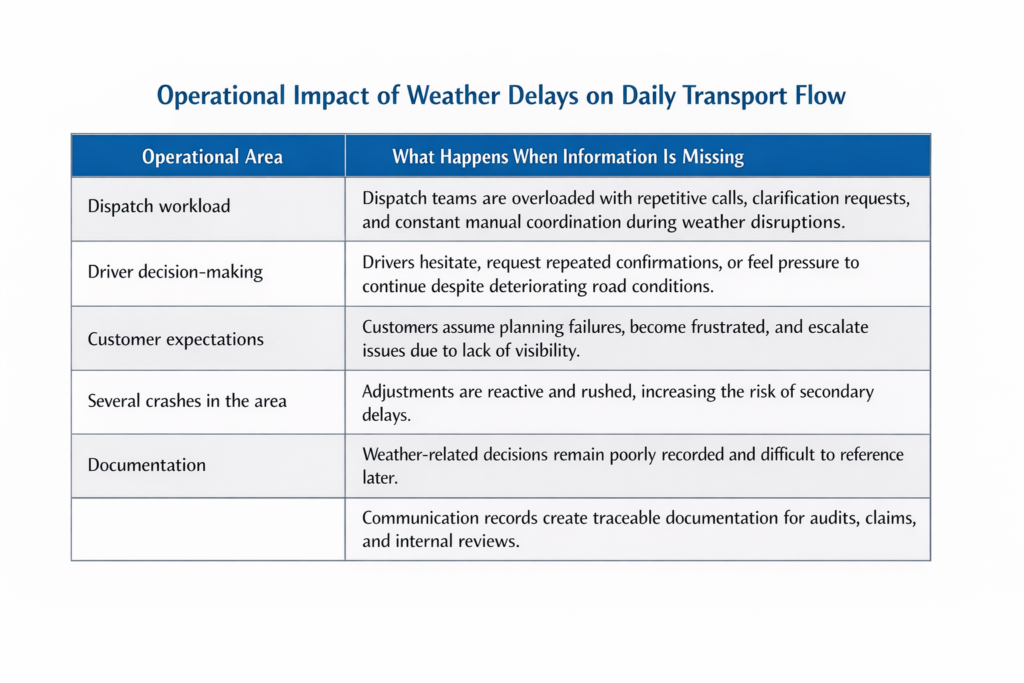
Information transmission during the weather-related disruptions helps in:
- Reducing inbound callers and extension to other areas
- Supporting the driver safety decision
- Setting achievable delivery expectations
- Warding off the erosion of goodwill with customers for the long term
- Documenting responsible operation behavior
In the trucking industry, silence sometimes means the company’s loss of control. A very short update can be more effective than waiting for perfect information which might never arrive.
Drivers’ View Towards Weather-Related Delays
Most customers accept that storms and road conditions may affect transport. However, they are highly cognizant of the uncertainty they bring. Thus, without an explanation for a delivery delay, customers will think of the worst: planning failure, routing inefficiencies, or a total lack of attention.
A well-written weather delay message can do the following:
- It justifies the reason behind the delay
- It shows that the shipment is being kept under watch and actively managed.
- It informs when the shipment will get the next update.
There is no need for the message to be lengthy; it just has to be good.
Essential Rules for Writing Weather Delay Messages
Portals containing message templates should be tapped into for these tips to be able to be received positively.
Be specific without being technical
You can mention the kind of weather or road conditions. Preferably, keep them succinct, and skip lengthy explanations.
Never blame the driver
Driver security comes first and should not be treated like a malfunction.
Avoid emotional language
Use of emotionally tinged language like ‘unfortunately’ or ‘we hope’ add stress. Therefore, it is better to concentrate on what is factual and real.
Provide an indication, not a promise
If there is no new ETA, mention when the next update will come.
Customer Message Templates for Weather-Related
How Weather Impacts The Supply Chain | Check Call
Delays
Every notification sent during weather disruptions should reduce uncertainty rather than introduce new questions for the customer. Initial Weather Delay Notification. This message is used when conditions first impact delivery. Delivery Update Due to Weather Conditions. Current weather conditions along the planned route are affecting transit progress. To ensure driver safety and protect the shipment, delivery timing may be delayed. We are monitoring road conditions closely and will provide an update as the situation develops. This type of message establishes control without committing to an unrealistic schedule. Follow-Up Update When Conditions Remain Unstable. Used when customers are waiting but conditions have not improved. Weather Update – Shipment Status. Adverse weather continues to impact road conditions in the area. Your shipment remains secure and under active supervision. At this time, delivery timing remains subject to change. We will issue another update once conditions allow clearer planning. This reassures the customer without forcing false certainty. Message With a Revised Delivery Time. Used once conditions stabilize or a route change is confirmed. Revised Delivery Schedule. Based on updated road conditions and route assessment, we have adjusted the delivery schedule for your shipment. Updated delivery window: [Date / Time]. This change reflects current safety requirements and traffic conditions.
Dispatcher Message Templates for Drivers During Weather Events
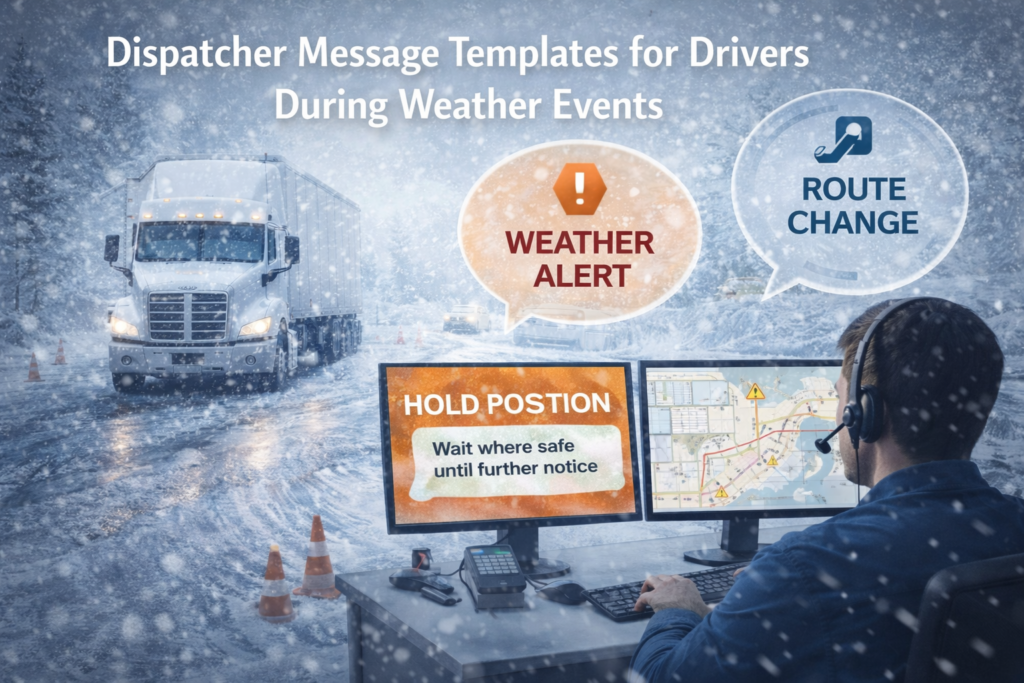
Dispatcher messages must be direct and supportive. Ambiguous instructions increase risk. Each dispatcher message during weather disruptions must remain short, factual, and focused on safety rather than operational pressure. Weather Alert to Driver. Dispatch Notice: Weather conditions ahead may affect road safety. Use discretion, reduce speed as needed, and avoid unsafe segments. Dispatch is monitoring conditions. A timely weather alert helps drivers adjust decisions early instead of reacting when road conditions have already deteriorated. Instruction to Hold Position. Dispatch Update: Due to deteriorating road conditions, please stage at the nearest safe location. This is a safety-based decision. Await further instructions. Route Change Notification. Dispatch Notice: Current weather requires a route adjustment. Do not proceed on the original route. Updated routing will follow once confirmed.
Urgent Weather Communication Templates
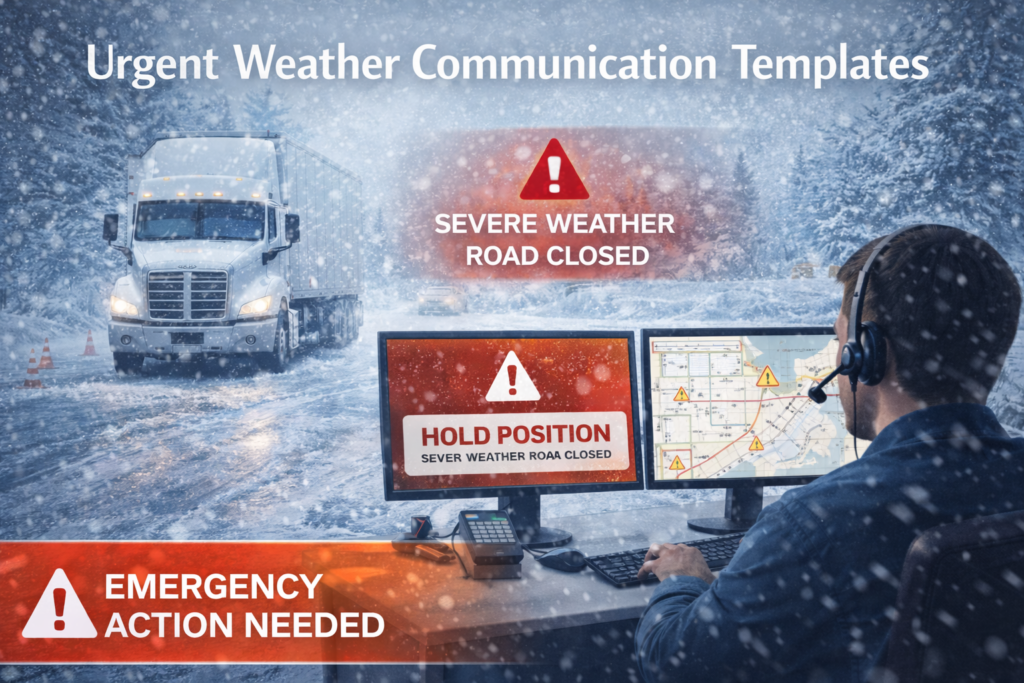
Some situations require immediate action. Severe Weather or Road Closure Alert. URGENT: Severe weather has caused road closures ahead. Stop at the nearest safe location immediately and confirm status with dispatch. An urgent message should prioritize clarity and action over explanation when time-sensitive safety decisions are required. Extreme weather situations require faster decisions and clearer communication than routine service disruptions.
Weather Severity Level Communication Priority
Customer Notifications for Service Disruptions
Service Disruption Announcement
Subject: Temporary Service Disruption Due to Weather. Severe weather is currently impacting transport operations in the region. Delivery schedules may be affected until conditions improve. Driver safety and freight protection remain our priority. Normal service will resume as soon as conditions allow.
Unexpected Delay Acknowledgment. Subject: Shipment Update. Weather conditions have caused an unexpected delay in transit. We are adjusting operations to maintain safety and delivery integrity. Thank you for your understanding during this disruption.
Updates During Extended Weather Events
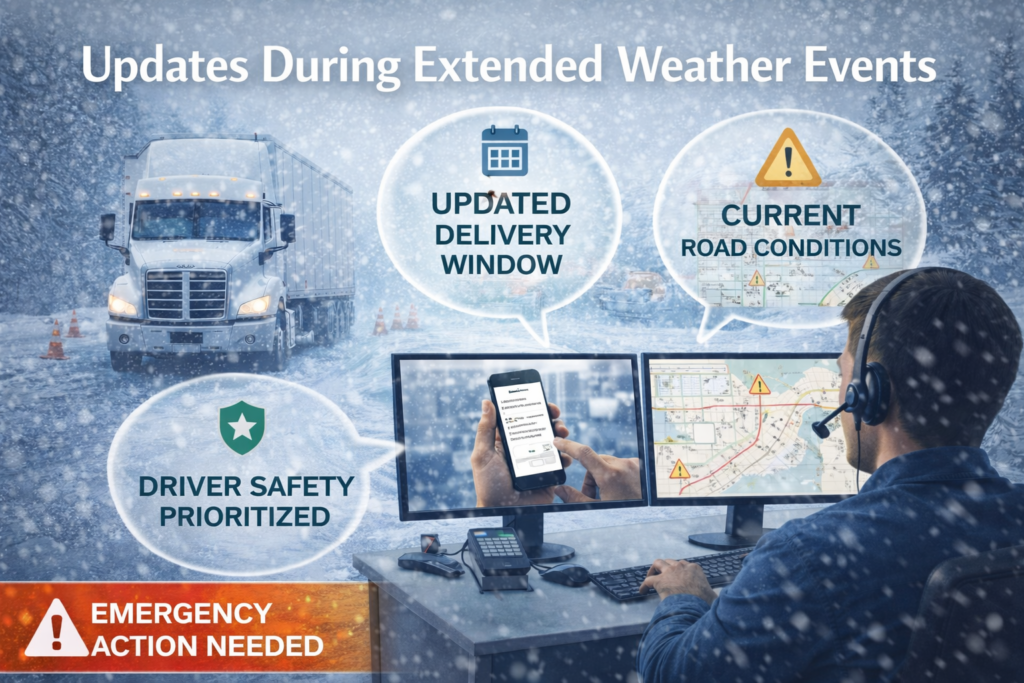
Multi-Day Delay Update
Subject: Ongoing Weather Delay Update. Continued adverse weather is affecting road access and transit flow. Your shipment remains secure, and planning adjustments are ongoing. Next update scheduled for: [Date / Time]. Regular updates on delivery status help customers plan their operations even when final timing remains uncertain.
Special Scenarios: Route Changes and Cancellations. Route Change Due to Road Conditions. Subject: Route Adjustment Notification. Current road conditions require a route change to maintain safe transport. This may impact delivery timing. Updated details will follow shortly.
Intermodal or Flight Cancellation Notice. Subject: Transport Update – Weather Impact. Weather conditions have caused cancellation or delay of the planned transport segment. Alternative arrangements are being reviewed. A flight cancellation within an intermodal chain often impacts multiple downstream deliveries and requires immediate clarification.
Why Templates Improve Safety and Efficiency
Structured templates remove emotion from urgent situations. Dispatchers communicate consistently. Drivers receive clear safety-first instructions. Customers feel informed instead of ignored.
Templates also support:
- Consistent customer communication
- Faster response during storms
- Reduced pressure on drivers
- Better documentation of decisions
In weather-driven disruptions, clarity becomes a safety tool.
Final Perspective: Communication Is Part of Operations
Weather will always disrupt transport. What defines a professional operation is how those disruptions are managed and communicated.
Clear messages protect driver safety, preserve customer trust, and prevent small delays from turning into reputational damage. In trucking, the right message at the right time can be as critical as the right route.
FAQs
Why is it better to send an early traffic delay message even if there is no new ETA?
It is understandable that the lack of communication could lead to an assumption about the situation. The customers, when they do not hear anything, will definitely think more about the operational failure than about the weather problem. Informing the customers beforehand that the situation is comprehended, monitored, and thought over, even if the exact time is never mentioned is the right way to act during extreme weather.
Should weather delay messages specify technical details about road conditions?
No, the majority of the receivers do not really want to be aware of the weather and traffic data. It is enough first in your mind, the main thing is to establish why the movement is slower and the decision taken. Too detailed reasoning instead of clear language more times than not just causes more confusion.
How frequently customers should be notified during long-term weather breaks?
The updates should be made discretionary, not mandatory. Reducing the uncertainties of the dispatch by stating that the situation is the same and will stay the same, and the delivery is still monitored will allow the customers to design their activities. A time limit for the update that is going to be issued would be more useful than random updates sent out in a spur of a moment.
What is the reason dispatchers should avoid the use of emotional language in weather communication?
Emotion is a stressor. Words such as ‘sorry,’ ‘hope,’ ‘frustration’ can unintentionally raise the tension further. The neutral factual language keeps the communication objective and creates a reinforcing effect that the decisions are made for safety and responsibility, not the lack of control.
Can cargo be postponed and not provide a new route right away?
Yes. In many weather situations, holding is safer than blindly casting off. Notifying that the break lasts because it is a carefully made choice for the sake of safety stops the customers, and drivers interpreting the delay as inactivity or neglect and saves it.