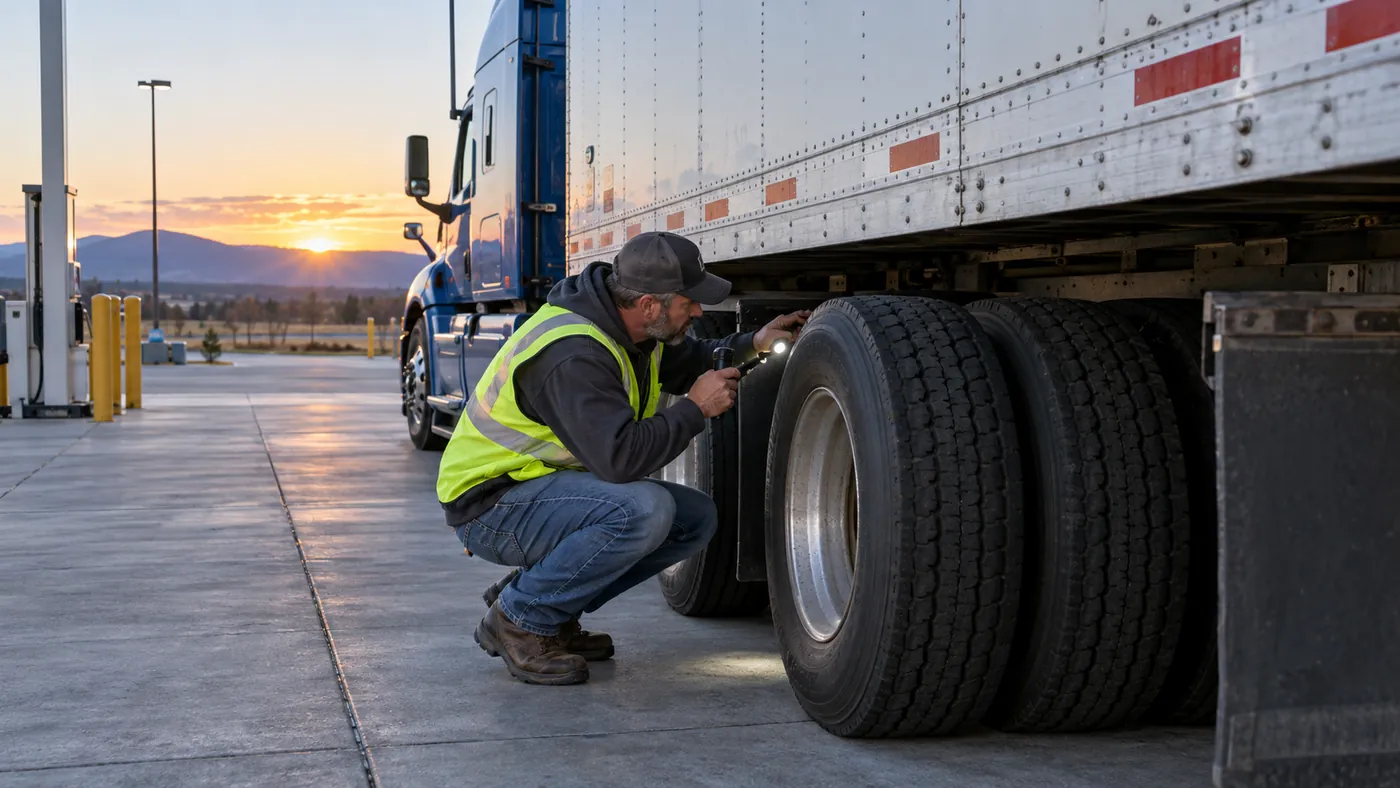
Most tire failures do not begin with a dramatic bang. They begin with a slow leak, damaged valve, cut sidewall, trapped debris, uneven wear, excess load, or heat that went unnoticed during a rushed inspection. A driver who develops a repeatable tire routine has a better chance of finding the small warning before it becomes a roadside emergency.
The Federal Motor Carrier Safety Administration specifically tells commercial drivers to complete pre-trip safety inspections, particularly for tires and brakes. FMCSA's commercial tire guidance also emphasizes daily damage checks and cold-pressure readings before a trip. The point is simple: a quick kick or glance is not enough.
Begin With a Consistent Walkaround
Inspect the tires in the same order every time. Start at the driver's-side steer tire, move around the tractor, then follow the trailer axles and return along the opposite side. A fixed pattern reduces the chance that a wheel position will be skipped when the yard is busy or the weather is poor.
Carry a bright flashlight, an accurate commercial tire-pressure gauge, and a tread-depth gauge. Keep gloves and eye protection available. If your company uses an inspection app or paper form, record the wheel position rather than writing only “low tire” or “damaged tread.” The technician needs to know exactly which tire requires attention.
Measure Pressure When the Tires Are Cold
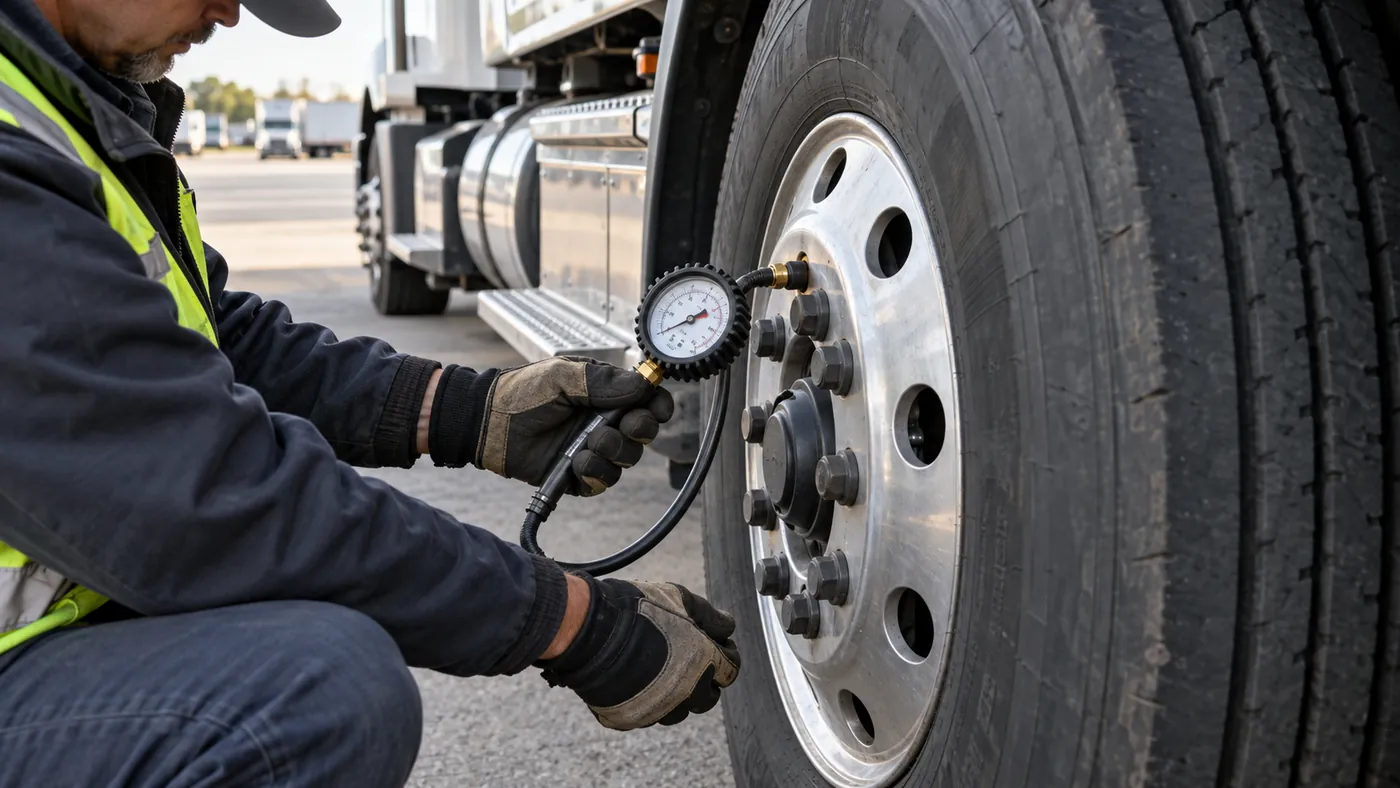
Pressure is one of the most important tire conditions a driver can verify. FMCSA's Commercial Tire Safety Tips advises drivers to gauge tires cold before each trip and adjust them as necessary. Heat generated during driving raises pressure, so a reading after a long run is not directly comparable with a cold specification.
Use the pressure specified by the motor carrier, vehicle manufacturer, tire program, and load requirements. The large number molded into a sidewall is not a universal target for every axle and load. If a reading is outside company limits, do not hide the problem by adding air and immediately leaving. Look for the reason: a puncture, loose valve core, damaged stem, rim problem, or repeat leak may require a technician.
Read the Tread Like a Maintenance Report
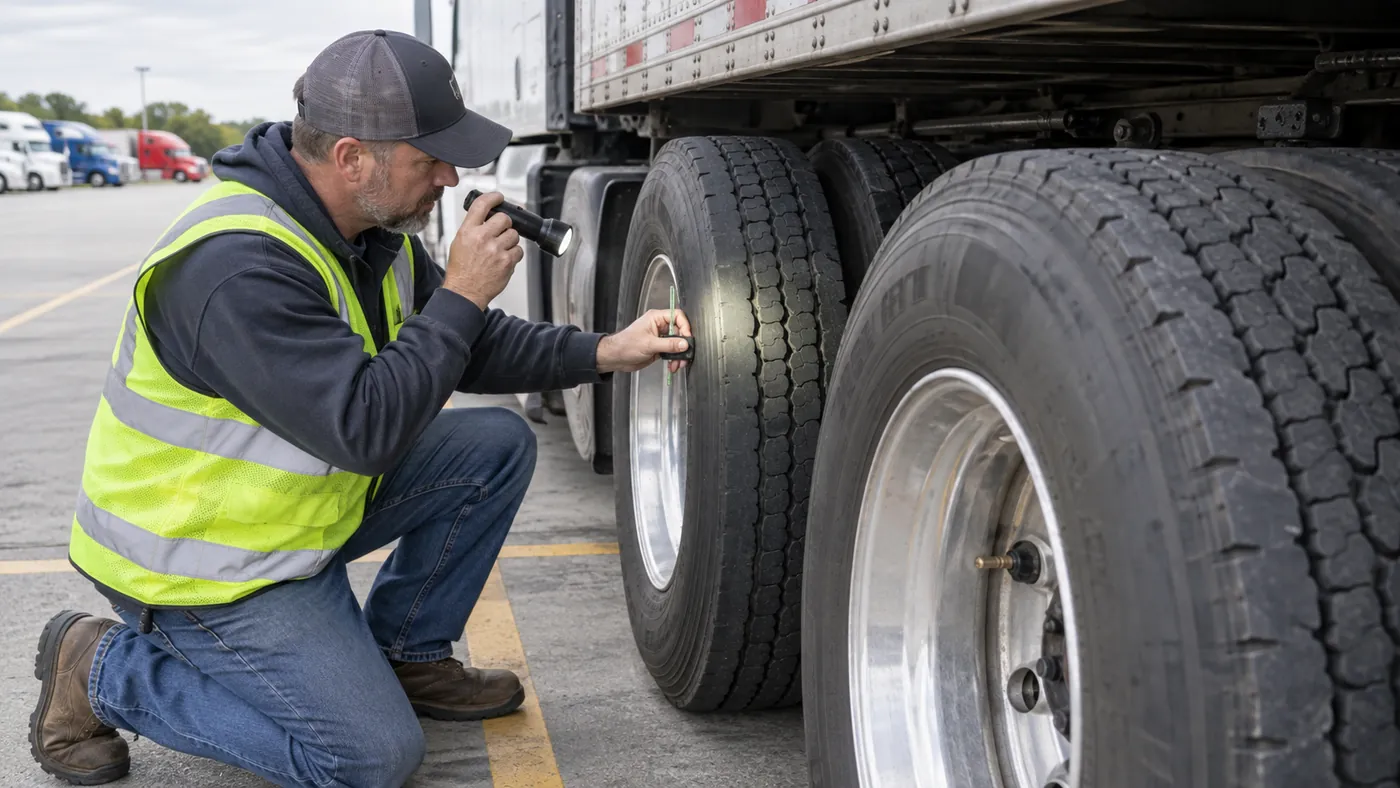
Tread depth matters, but the wear pattern often tells the more useful story. Measure in several grooves and compare positions across the same axle. Check the inside edge as carefully as the outside; inner wear can remain hidden when the driver looks only from the side.
Watch for:
- One-sided wear, which may point to alignment, suspension, or axle issues.
- Cupping or scalloping, which can be associated with balance, shock, suspension, or mechanical problems.
- Flat spots, which may follow wheel lockup or braking trouble.
- Rapid shoulder wear, which may be related to inflation, loading, alignment, or operating conditions.
- Exposed cord, deep cuts, or separated tread, which require the truck to stay parked until qualified personnel evaluate the tire.
Do not diagnose a complex wear pattern from appearance alone. Photograph it, report the wheel position, and let the maintenance team determine the cause. Replacing rubber without correcting the mechanical problem can send the next tire down the same path.
Inspect Sidewalls, Valves, and Rims
Use the flashlight at a shallow angle across each sidewall. That makes bubbles, bulges, cuts, cracking, exposed material, and objects easier to see. Check both visible and inward-facing surfaces as far as access safely allows. Never crawl under equipment that has not been secured according to company procedures.
Inspect valve stems for bends, cracks, looseness, missing caps, and contact with the wheel. Look around the rim for cracks, fresh rust trails, elongated bolt holes, damaged fasteners, or signs that the wheel has shifted. Oil near a hub, a missing component, or a wheel that appears out of line deserves immediate attention.
Dual Tires Need More Than Two Quick Kicks
A dual assembly can hide problems between the tires. Shine the light through the gap and look for rocks, metal, broken mudflap hardware, or other objects that can rub both sidewalls. Confirm that the tires are not touching under load and that both valve stems can be reached without damage.
Measure each tire separately. Two tires that sound similar when struck can still have meaningfully different pressures. A low tire forces its mate to carry more of the load and can increase flex and heat in the assembly. Compare the readings under your carrier's tire policy and report a repeated mismatch.
Heat Is a Warning, Not a Diagnosis
At fuel and rest stops, walk around the combination before settling into the cab. A tire, wheel, or hub that is much hotter than the others may indicate low pressure, excess load, bearing trouble, brake drag, or another mechanical problem. Smell can also provide an early warning: hot rubber, overheated brakes, or lubricant odors should not be ignored.
Do not touch a suspicious wheel or crawl beside traffic to investigate. Park safely, keep people away from the area, and contact maintenance or roadside service. An infrared thermometer may help compare wheel positions, but the reading does not replace a physical inspection or a qualified diagnosis.
Separate Correctable Items From Stop-Work Defects
A missing valve cap and a bulging sidewall are not the same level of problem. Drivers should know their carrier's defect policy and escalation path before a defect appears. Report pressure loss, cuts, bulges, exposed material, tread separation, contact between duals, damaged rims, loose hardware, and signs of severe heat promptly.
Federal rules and out-of-service criteria can depend on tire position, defect type, measurement, and operating circumstances. Do not guess at roadside legality from memory. When a tire may affect safe operation, keep the vehicle parked and involve qualified maintenance staff. FMCSA's safety planner notes that tires, wheels, and rims are among the equipment drivers must be satisfied are in good working order before operating a commercial vehicle.
What to Do if a Tire Fails While Driving
A blowout can create vibration, noise, debris, and a pull through the steering or chassis. Keep both hands on the wheel, maintain control, avoid a sudden steering input, and reduce speed in a controlled way. Signal and move to a safe location only when conditions allow. Once stopped, protect the scene with emergency equipment according to regulations and company policy.
Do not stand in an active lane or directly beside a damaged tire. Tire components can be hot, unstable, or under pressure. Contact dispatch or roadside service, describe the axle and wheel position, and mention any smoke, fire, leaking fluid, wheel damage, or cargo concern.
A Five-Minute Tire Check at Every Stop
- Approach each wheel position and look for lean, low inflation, or fresh damage.
- Scan tread and sidewalls with a flashlight, including the inside surfaces you can safely see.
- Check dual spacing and remove no object unless company procedure says it is safe.
- Compare tires, wheels, and hubs for unusual heat, odor, noise, or leakage.
- Record and report defects by axle and wheel position before continuing.
Small Findings Prevent Big Delays
A careful tire inspection does not require a driver to become a tire technician. It requires a consistent route around the truck, the right tools, accurate observations, and a willingness to stop when something is wrong. The best inspection is the one performed before heat, speed, and load turn a manageable defect into a failure.
Build the routine into every pre-trip and every major stop. Record pressure trends, learn what normal wear looks like on your equipment, and give maintenance clear information. That discipline protects the driver, the load, the truck, and everyone sharing the road.