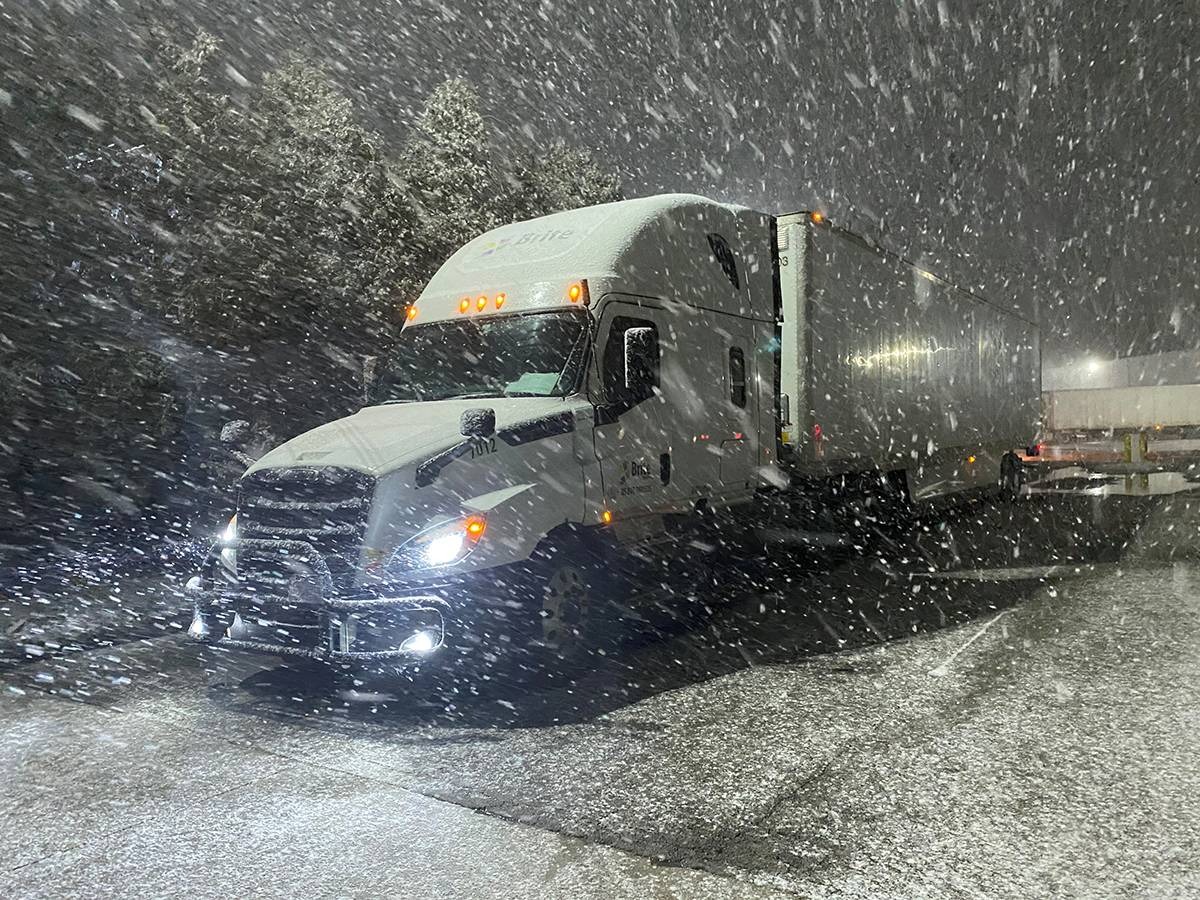
During the winter, dispatching can be likened to a roller coaster
. Many methods that work well in clear weather break down the moment they detect snow, ice, freezing rain, or black ice on the map. Previously efficient routes can turn into dangerous ones overnight, and decisions that are usually made in a matter of seconds are now made under pressure, limited visibility, and incomplete information.
For the dispatcher, changing routes in bad weather is about more than just saving miles or improving ETAs. It is about the sap dispatcher to make a safe reroute and apply controlled risk management. The challenge is twofold: drivers’ safety and equipment protection while still achieving SLA winter levels with the winter road conditions that are realistic.
This guide explains the practical process for a dispatcher snow ice reroute – like seeing snow and ice as operational risks, applying safety first dispatch principles, and keeping fleet operations stable during severe winter conditions.
Winter weather rerouting therefore becomes a core element of dispatcher reroute safety, where each decision is measured against risk exposure and the ability to maintain SLA winter performance without escalation.
Winter Rerouting Starts at the Dispatch Desk
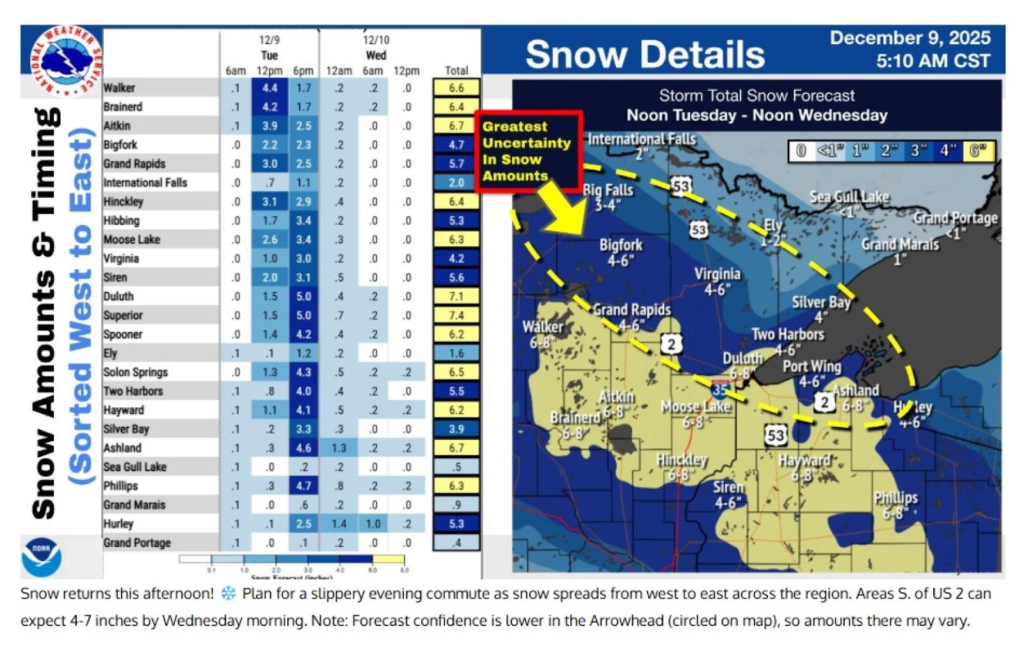
Snow ice driving safety is very often focused as a driver skill, inclination, and understanding, etc., but the most critical decisions arise long before a truck reaches the slippery section. Dispatch operations winter planning defines exposure to risk far more than throttle control or steering input.
Drivers deal with winter conditions locally, while dispatchers manage them throughout the system. They monitor the different weather systems that are moving across the regions, they see the places that were treated where the road still lays behind the treatment and how a single delay can cascade through the rest of the fleet. When dispatchers turn hesitant, they shift the whole decision on drivers is when minor disruptions grow to full failures.
Clearly, a dispatcher snow ice reroute is not only the technical task – first it is a leadership role.
Strong dispatch operations winter rely on early intervention and structured judgment, rather than reacting late through an emergency dispatch procedure once risks have already materialized.
Key Signals Dispatchers Monitor in Winter
- Snow, ice, freezing rain, or black ice on the map
- Limited visibility and incomplete information
- Places that were treated where the road still lays behind the treatment
- A single delay cascading through the rest of the fleet
- Risks already materialized requiring emergency dispatch procedure
Dispatch rerouted me due to Winter Storm!! Estes Express Line Haul Driver
Rerouting Snow and Ice Is a Leadership Decision
Rerouting in snow and ice sets the standard for driver safety protocols, communication discipline, and trust. Dispatchers who decisively lead during conditions of the winter period draw the line and make dispatcher guidelines snow that drivers can rely on.
Cold weather logistics failures very often accumulate when directions are vague or inconsistent. A strong dispatcher best practice eliminates doubts with regulations, ensuring that drivers do not have to take harmful decisions under the stress of uncertainty.
Dispatcher best practices during winter focus on clarity and consistency, reducing hesitation and minimizing service disruption across the fleet when conditions deteriorate.
Learning to See Snow and Ice as Operational Risks
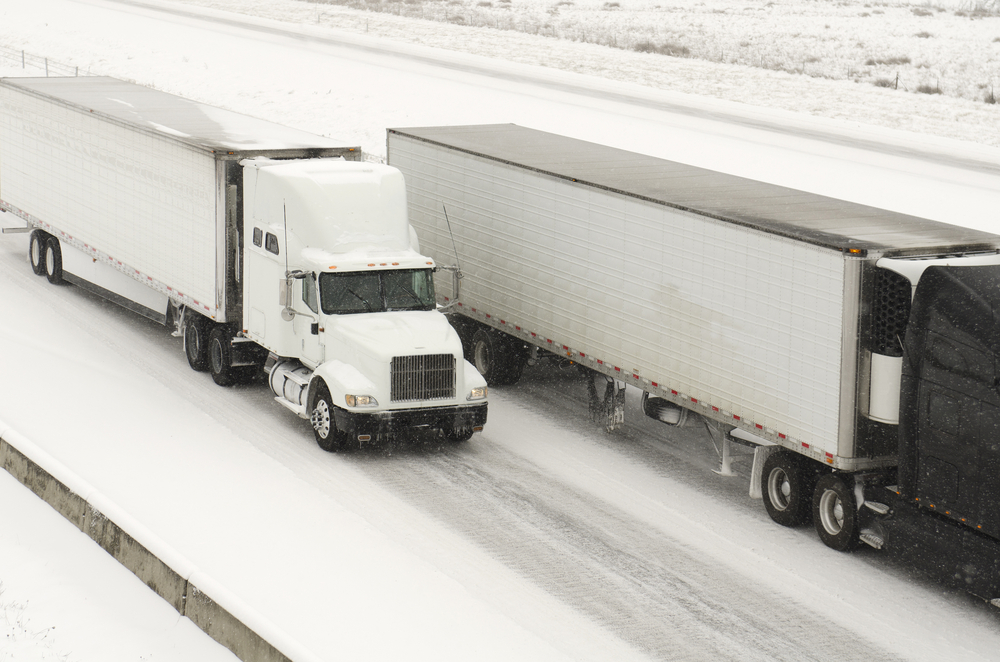
Winter conditions are not constant, and dispatchers must avoid treating every piece of snow or ice as equal. A light snow on a treated interstate may only slow down traffic while freezing rain, black ice on the bridges, or packed snow on the secondary roads dramatically increase accident probability. Research shows that adverse winter weather like snow and ice is correlated with increased crash frequencies and reduced vehicle speeds, highlighting the heightened risk posed by winter road conditions. (Source: Safety Effects of Winter Weather: The State of Knowledge and Remaining Challenges) ResearchGate
Cold weather logistics issues arise from the dispatchers’ failure to recognize snow depth, surface temperature, wind, elevation, and traffic volume in reshaping risk. What seems manageable on a weather application can sometimes be dangerously misleading.
An effective fleet snow management requires dispatchers to examine both the probability and the seriousness of the event, not only the legality or the distance.
This approach supports accurate snow ice condition management, where routes are evaluated dynamically rather than assumed to remain stable throughout the event.
Winter Conditions vs Dispatch Risk Focus
| Winter Factor | Operational Risk Highlighted in Text |
| Light snow on treated interstate | Reduced speed, manageable flow |
| Freezing rain | High accident probability |
| Black ice on bridges | Sudden traction loss |
| Packed snow on secondary roads | Elevated crash risk |
| Wind, elevation, temperature drops | Route instability |
Winter Weather Driving Tips for Truck Drivers | Staying safe | stay warm
When Rerouting Is Not an Option Anymore
There are times when the winter weather rerouting is no longer optional, and a specific signal enters that the planned route is not defensible.
Such signals include freezing rain advisories, accident reports on the same road, driver comments about traction, or bridges and mountain passes entering a dangerous stage.
At this point handling delays ice is secondary to the incident prevention.
Safety-first dispatch does not wait for the road to be closed or accidents to happen. It acts while the alternatives are still available.
In these moments, dispatcher reroute safety takes precedence over schedule optimization, ensuring risks are contained before escalation.
Situations That Trigger Mandatory Rerouting
- Freezing rain advisories
- Accident reports on the same road
- Driver comments about traction
- Bridges and mountain passes entering a dangerous stage
- Routes no longer defensible
The Mindset That Safe Winter Rerouting Is Built On
Safe strategies for rerouting are built on logical, structured decisions rather than emotional responses to pressure from appointment schedules.
Dispatchers have to work out the seriousness and duration of the weather crisis, how stable the new routes are, contribution to driver hours, and the downstream effects on loads and customers. Managing the routes in snow conditions is based on decreasing the total operational risk, not on finding the quickest detour.
Longer routes which have predictable conditions tend to be safer and better both service-wise and safety-wise than risky shortcuts.
Such safe rerouting strategies prioritize operational continuity and reduce the likelihood of compounding delays later in the route.
Dispatcher Decision Trade-offs in Winter
| Dispatch Priority | Textual Interpretation |
| Shortest route | Higher risk in winter |
| Predictable conditions | Safer and more reliable |
| Speed recovery | Increases hazard |
| Buffer-based planning | Enhances safety and stability |
| Risk containment | Prevents escalation |
Driver Safety and SLA Are Not Enemies
One of the greatest misconceptions in the populous understanding of winter keeping drivers’ safe is that protocols interfere with service performance. However, the unsafe decisions are the quickest way to break SLA.
Accidents, equipment malfunctioning, and temporary halting result in much worse disruption than the pre-planned controlled fleet rerouting snow decisions. The stability, and not the speed, of the service level agreement winter performance depends on it.
Achieving SLA winter entails laying down the expectations from the outset and communicating clearly, rather than saying sorry after anything goes wrong.
Maintaining driver safety protocols during winter operations directly supports long-term SLA consistency instead of undermining it.
Driver Safety and SLA Are Not Enemies
One of the greatest misconceptions in the populous understanding of winter keeping drivers’ safe is that protocols interfere with service performance. However, the unsafe decisions are the quickest way to break SLA.
Accidents, equipment malfunctioning, and temporary halting result in much worse disruption than the pre-planned controlled fleet rerouting snow decisions. The stability, and not the speed, of the service level agreement winter performance depends on it.
Achieving SLA winter entails laying down the expectations from the outset and communicating clearly, rather than saying sorry after anything goes wrong.
Maintaining driver safety protocols during winter operations directly supports long-term SLA consistency instead of undermining it.
Communication as a Tool for Rerouting
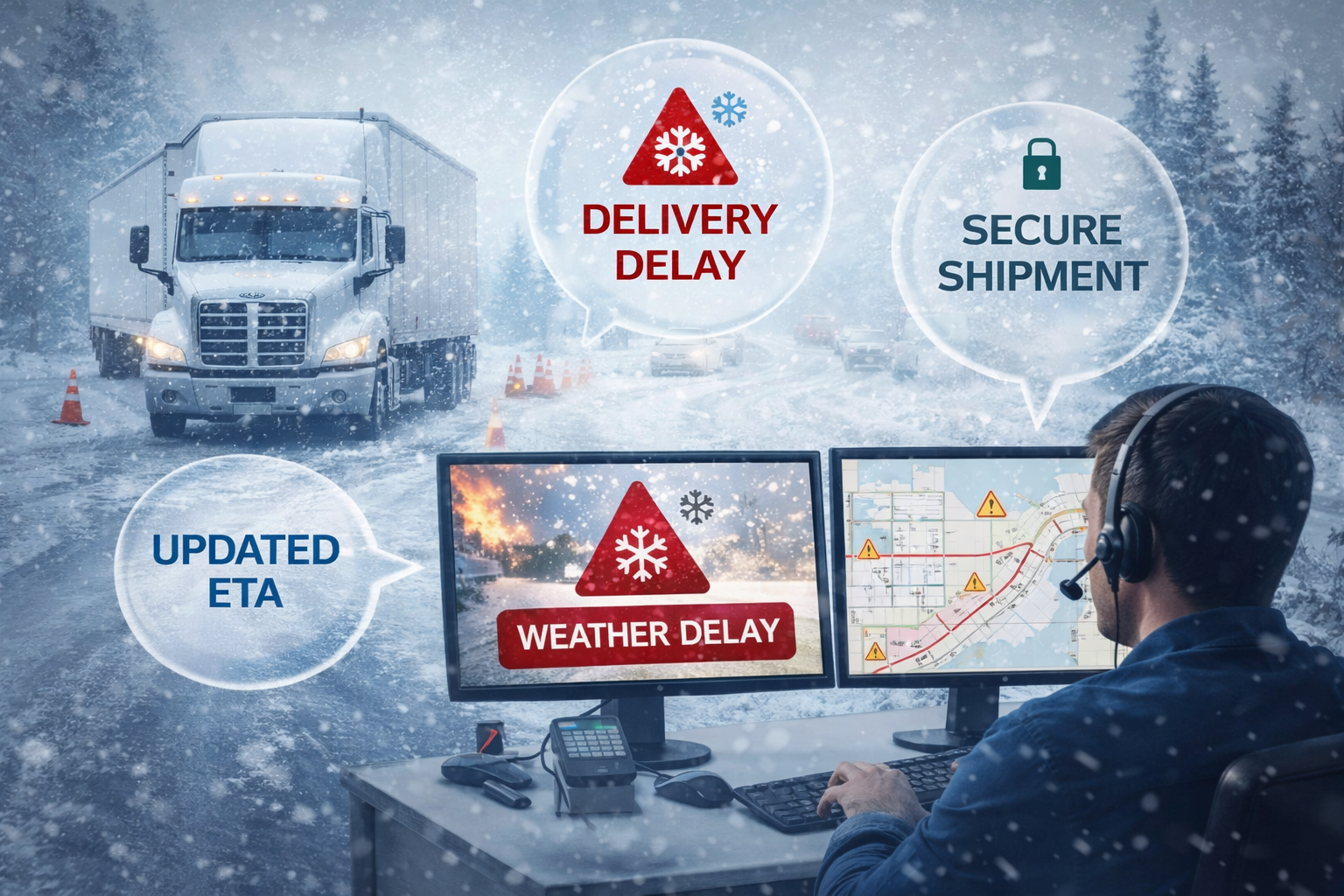
Minimizing the service disruption during the winter season starts with communication, not movement. Inclement weather logistics fail where dispatchers wait until the deliveries are too late in order to explain why.
Drivers require precise reroute instructions and the safety rationale. Customers need timely notice of the weather-related delays. Planners request updated ETAs to rebalance the network.
A command dispatch protocol with winter messaging templates helps sustain dispatch efficiency ice even in rapidly transformed conditions.
Clear communication is one of the most effective tools for minimizing service disruption during winter rerouting scenarios.
Speed Pressure is the Catalyst of Winter Dispatch Errors
Speed pressure is one of the most fundamental winter dispatching errors. Trying to “make up the time” on the snow or the ice is incrementing the hazard greatly.
A proper snow ice safety plan takes the contrary approach to managing speed pressure through buffer management. Predictively adding time, reducing mileage expectations, and rearranging delivery sequences enhances transport safety snow and protects freight.
Drivers achieve better consistency when they are given the allowance to vacate the premises at a lower speed without the fear of penalty. This approach aligns dispatch decisions with realistic winter driving behavior rather than artificial time targets.
Choosing Routes That Stay Safe as Conditions Change
Fleet rerouting snow relies on the ability to determine which roads will be unaffected during weather events. Major interstate highways are often more secure than side roads, even if they add some distance.
Dispatchers should also steer clear of areas with rapid elevation changes, places that are prone to icing, and areas that have poor access. Snow ice condition management gives priority to predictability rather than optimizing, which is theoretical.
Safe rerouting strategies give priority to roads that stay open, not roads that seem faster on paper. Optimizing routes snow conditions in winter means choosing stability over short-term efficiency gains.
Managing Driver Hours and Fatigue During Reroutes
Reducing average speed and increasing mental workload is what winter rerouting does. Dispatchers must immediately rethink hours-of-service effect when routes deviate.
Cold weather, reduced visibility, and different corrections increase fatigue. Dispatch operations on the winter must deal with earlier stops and car parking shortages to prevent unsafe situations.
Many winter accidents thus stem from the mismanagement of fatigue as opposed to the weather. Fleet management snow strategies must integrate fatigue awareness into every rerouting decision.
Planned Rerouting Vs Emergency Response
The difference between planned winter weather reroutes and emergency reactions is essentially crucial.
Planned rerouting is the one where the weather forecast is used to move the trucks away from the risk before the conditions deteriorate. An emergency response is the one that takes place when hazards appear unexpectedly.
The efficiency of ice dispatch is improved where decisions are made proactively, thereby minimizing chaos and building driver trust in the dispatchers’ judgment.
Planned actions reduce dependency on emergency dispatch procedure execution under high stress.
Data That Supports Better Winter Decisions
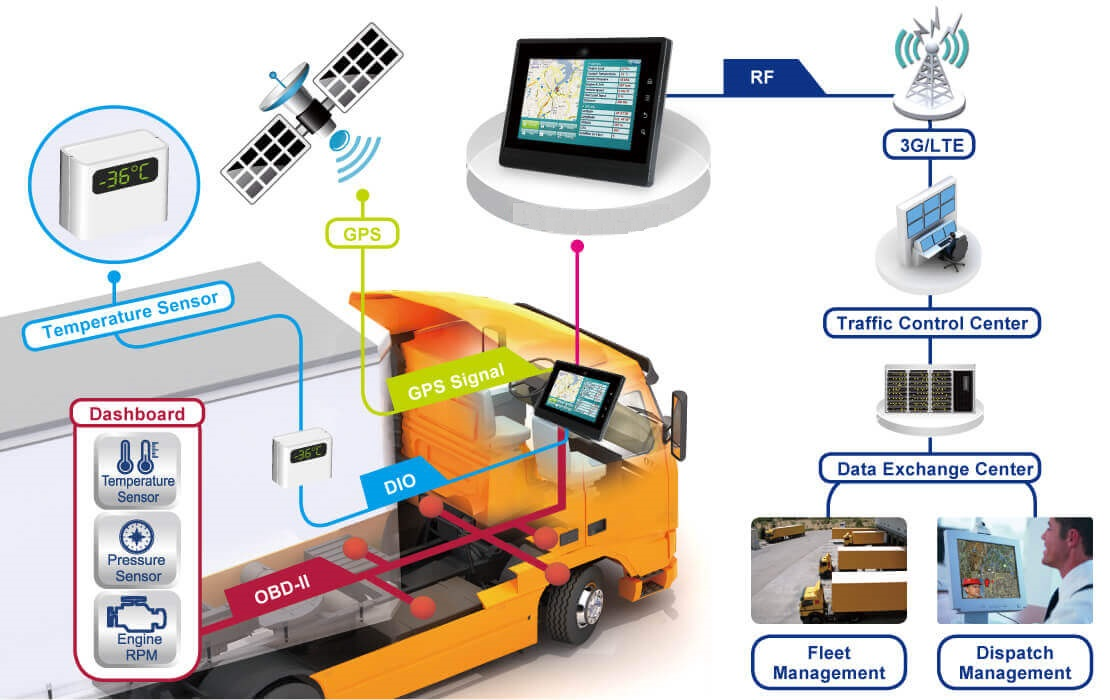
No single tool can solve winter dispatching challenges. Successful dispatchers integrate road condition feeds, weather radar, driver feedback, and historical winter performance data.
Optimizing routes snow data requires correlating information, not trusting one signal blindly. Real-time driver input is still one of the most important resources in the winter operations.
This layered approach strengthens dispatch efficiency ice across rapidly changing weather patterns.
Coping with Customer Pushback on Winter Delays
Service disputes frequently increase in the winter season when customers expect summer-level performance. Dispatchers should present delays as risk mitigation, not ones of operations.
Transparent explanations about the state of the roads in winter, the measures taken to ensure safety, and limits imposed by regulations do a lot to ease tension. The long-term relationships are sustained by honesty even when the short-term metrics are lower.
Clear framing helps customers understand the role of inclement weather logistics in delivery outcomes.
Getting Gleaner Through Every Snow and Ice Event
Every winter event should clarify the guidelines for generators snow-based waiter. Fleet management snow fosters through consistent post-event review.
Dispatch specs should look at what reduced risk, where delays compounded for no reason, and how communication affected outcomes. Winter operations are about pacing and changing, not strict rules. These reviews refine dispatcher guidelines snow and improve future rerouting accuracy.
Why Safety-First Dispatch Shows Rewards in the End
Pushing trucks through unsafe winter conditions very seldom preserves performance. Accidents, injuries, and burnout destroy reliability more than rerouting can ever do.
Dispatchers treating snow and ice as operational constraints rather than inconveniences not only protect drivers, equipment, and customer trust but also outperform risky operations in the long run. Dispatcher reroute safety ultimately supports both resilience and long-term profitability.
Final Thoughts
Rerouting in snow and ice is not a matter of short, flash things. It is the rectitude in decision-making when under pressure. Safety first dispatch, structured logic, proactive communication, and realistic SLA management are the main ingredients of successful winter operations.
When dispatchers, with their clear and restraining guidance, lead the winter rerouting, they will both keep the drivers safe and the fleet moving even when the roads are impassable.