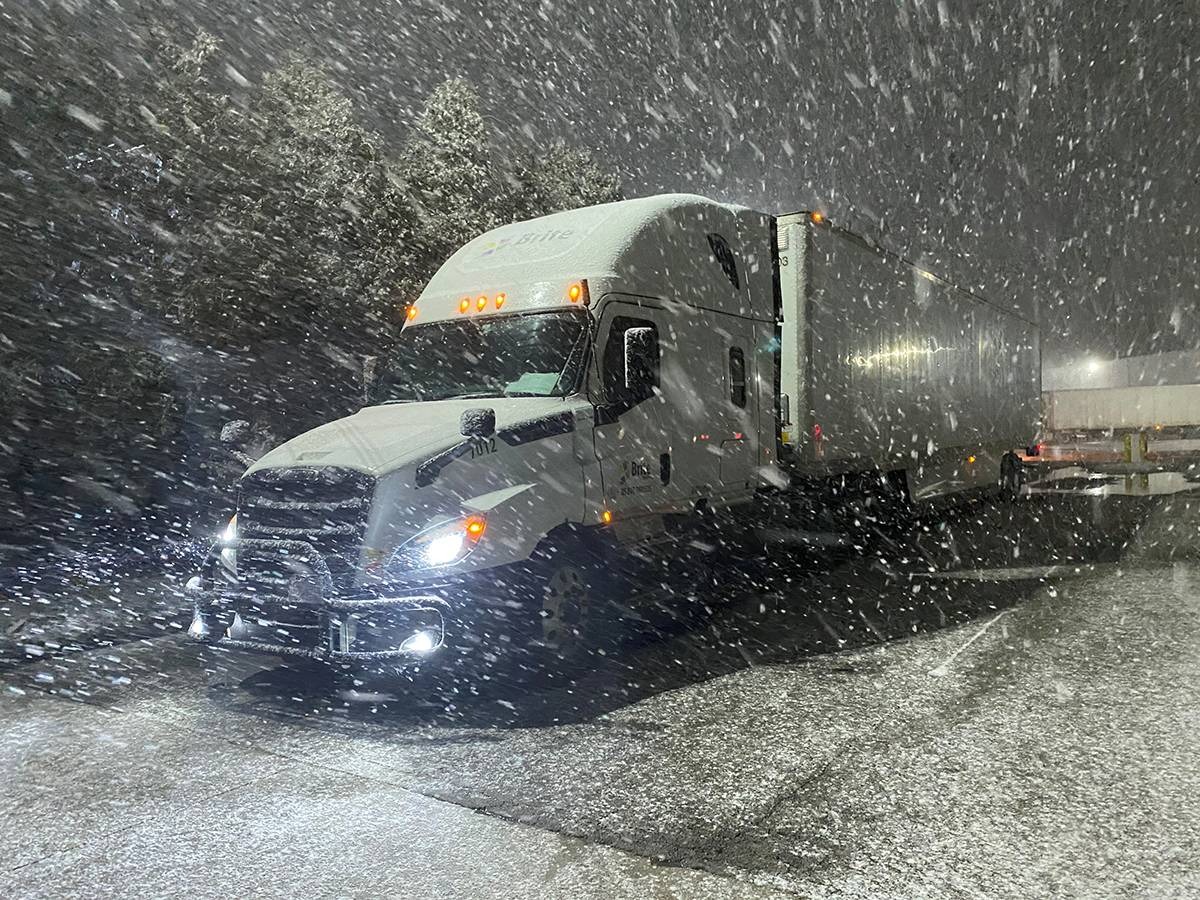
Winter changes the character of trucking to the extent that it has to be constantly recalibrated to avoid accidents. A road route that was safe just an hour earlier can get shut down in an hour due to snow bands, freezing rain, wind draughts, or sudden road restrictions. Adaptation to these conditions is no longer solely based on confidence and experience — it now inches towards timely information.
For truck drivers, wintertime security is determined by their skill’s fast and accurate monitoring. No right tools that just inform — they increase decision time, decision time is the most crucial asset in winter driving.
In practice, winter weather monitoring tools and travel safety tools extend driver awareness beyond visibility limits and human perception. These systems allow truck drivers to rely on reliable weather forecasts and road closure information instead of reacting blindly to changing snow road conditions.
This article provides a thematic discussion on software applications for tracking the weather and road restrictions in winter, not to mention, that there is a focus on what specifically applies to long-haul truck driving rather than granting generalized travel advice.
Winter Driving Tips for Truck Drivers
The Importance of Winter Monitoring Tools Over Skills
The best example with a skilled driver who can perform better than the physically possible rate. Physics can’t be fooled. Lack of friction, low visibility, and slow reaction time are general things that come with winter. Ice roads appear all of a sudden, snow accretion makes lane behavior different, and road closures spread faster than people talk.
Winter weather monitoring tools not only eliminate the need that humans have but also:
Increase the view from the windowpane doing more than the driver’s vision.
Show what will happen in the future instead of just what did happen.
Cut off very much the dependence on the last-minute reactions.
In snowy trucking, it is the element of surprise that is the main evil. Monitoring tools are the ones that can take away this surprise.
In winter trucking, road safety tools and road restriction alerts play a central role in reducing uncertainty. By monitoring winter storms in advance, drivers gain time to adjust speed, routing, and stopping decisions before winter road restrictions fully take effect.
Weather Radar Apps: More Than Just Forecasts, They Also Predict Storm Movement
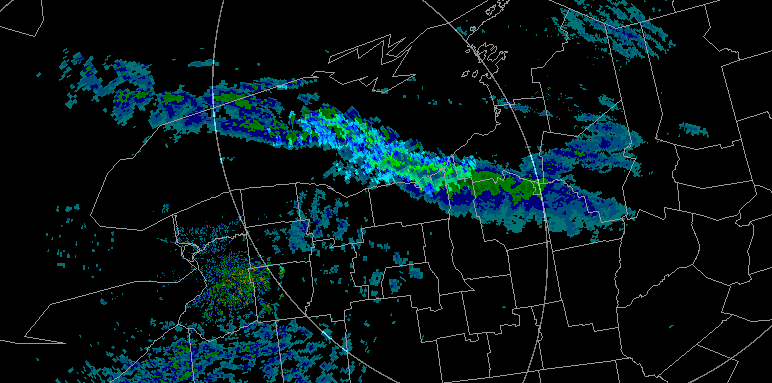
Common forecasts usually say what could happen. Radar is the one that tells what is going on at the present time.
Weather radar apps enable drivers to visualize snow bands, get the structural and motion map of storms, and view intensity changes in real-time. Understanding is crucial as winter storms are often not uniform. A particular route could be clear for a while, but afterward, it could become completely blocked.
All these radar-based applications are useful for:
- Watching the development of winter storms,
- Spotting narrow heavy snow bands,
- Freezing rain transitioning,
- Forecasting the areas with wind-driven whiteout.
What Radar Shows vs What Forecasts Miss
| Aspect | Standard Forecast | Weather Radar |
| Snow intensity | Averaged | Exactly where it is |
| Storm movement | Delayed | Real-time |
| Rain/sleet transition | Often missed | Clearly visible |
| Local variations | Low accuracy | High accuracy |
| Decision usefulness | Limited | High |
Weather radar apps remain among the best weather tools available for truck drivers because they combine real-time data with predictive storm behavior. When paired with reliable weather forecasts, radar becomes a core element of essential winter tools for long-haul operations.
Radar depends not on what should happen but on what is the present state. That is why the foundation for winter driving safety has to be the radar.
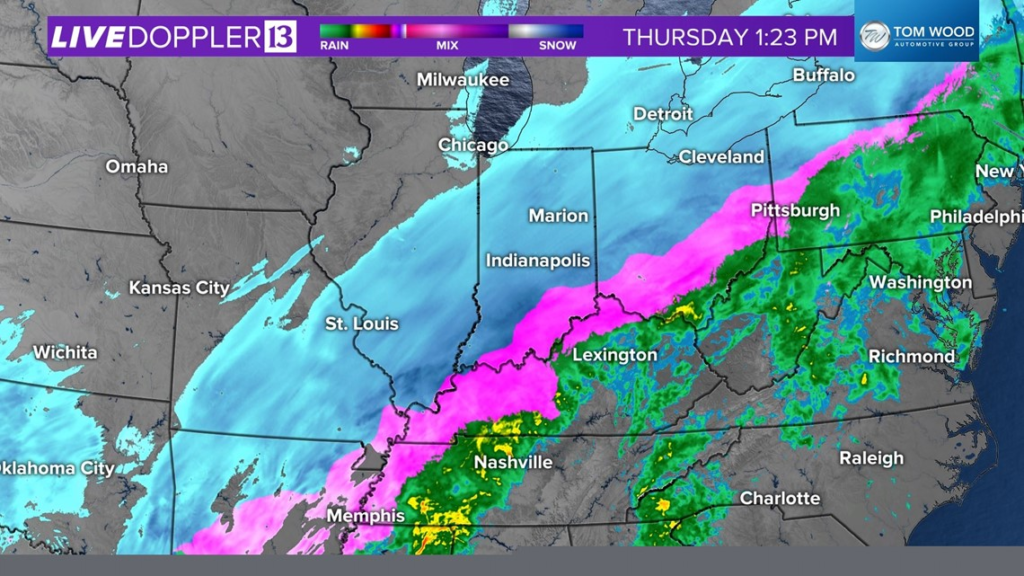
Road Condition Apps: Where Weather Meets Reality
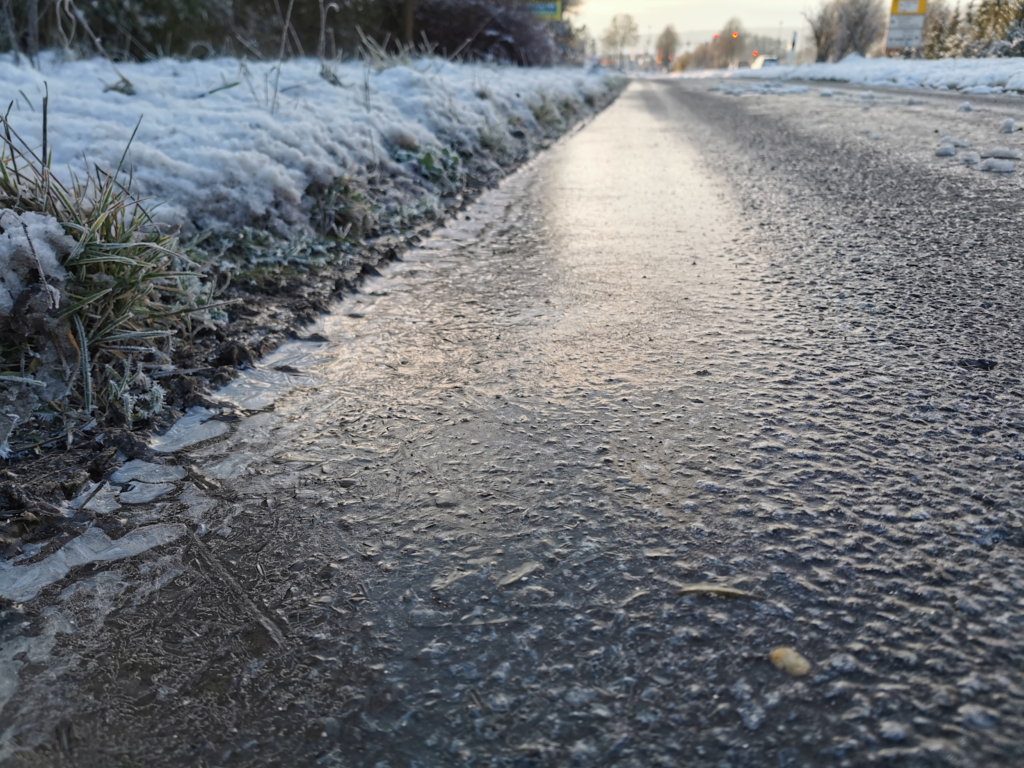
Weather and road conditions are two different terms. Snow falling at 15°F has different implications than snow at 32°F. Road condition apps plug this between using road surface performance, not just weather inputs.
These tools deliver information on:
- Snow-covered versus ice-covered pavement,
- Plowed versus untreated roads,
- Traction warnings,
- Visibility limitations caused by blowing snow.
Road condition apps most commonly answer the most vital problem for truck drivers:
Can I operate my equipment as expected on this surface at this moment?
Road condition apps transform raw weather data into actionable insight by reflecting real snow road conditions and surface behavior. This layer of snow and ice monitoring is critical for winter driving safety, especially when visual cues are misleading.
Road Restrictions and Closures: Information That Saves Hours
Wintertime is packed with the blockade of the road. Requiring the chain and enforcing the sudden closure are two classic cases that have to be monitored by drivers, as the jurisdiction applies them indiscriminately across the state.
Informing drivers about road restrictions in the winter months allows them to:
- Aviton vague deadend,
- Follow winter driving laws,
- Diversion before congestion is built,
- Reduce time by forced turnarounds.
Common Winter Road Restrictions Drivers Must Monitor
| Restriction Type | Typical Trigger | Risk If Missed |
| Chain requirements | Snow accumulation | Fines, forced stop |
| Road closures | Accidents, storms | Hours of delay |
| Weight restrictions | Ice damage | Legal violation |
| Lane closures | Snow removal | Congestion |
| Speed limits | Visibility loss | Increased accident risk |
Access to timely road closure information and road restriction alerts allows drivers to avoid forced turnarounds and compliance violations. These updates are a core part of modern winter travel resources for commercial drivers operating across multiple jurisdictions.
Restriction-ignoring prompts often cost more time than halting early.
Real-Time Weather Alerts: Timing Beats Intensity
Extreme weather devices primarily do not deal with fear — they provide timely information. Real-time weather alerts are more of a proactive approach than just of a reactive one to the forthcoming peak conditions.
The efficient alerts are:
- rapid temperature drops (black ice risk),
- wind gust warnings,
- freezing rain start time,
- sudden snowfall increases.
If on a winter work, 30 minutes before the event act in a rightful way then there is a significant difference between a safety stop or being trapped on an iced grade.
Traffic and Weather Combined: Reading the Situation, Not Just the Sky
Traffic activity as a water sensor. Weather, especially in winter, is not only the predictor of the state of the road but the indirect sensor. For example, the sudden slowdown of the traffic pretty much tells the driver that the road is becoming less safe even before they get the official notification.
The tools that join traffic and weather updates are a good way for drivers to:
- Detect the accident spots,
- Identify snow removal bottlenecks,
- Avoid overloaded detour routes,
- Evaluate whether stopping early is wiser than pushing ahead.
Safety in winter driving gets better if trucks’ drivers perceive traffic patterns as part of weather monitoring.
Snow and Ice Monitoring: The Invisible Threat
Snow is apparent. Ice is elusive.
Snow and ice monitoring devices mainly target:
- Surface temperature trends,
- freeze-thaw cycles,
- Bridge and overpass risk,
- Black ice probability.
Many winter incidents are caused by ice road conditions because they seem harmless. Tools that emphasize ice risk are doing away with the need for guessing once more.
Necessary Tools for Winter Monitoring: What Really Works
While many apps are vying for your attention, the spiritual core of winter truck driving is a small group of stable and reliable tools.
In three categories, they are still the most important:
- Weather radar applications for storm tracing,
- Road surface conditions and restrictions for surface legality,
- Alert systems for fast notification of changes.
Together, these essential winter tools form a layered defense system that supports winter driving safety by combining forecasting, surface awareness, and restriction monitoring into one decision framework.
Anything that goes a bit further from these things should not be regarded as basic but supplementary instead.
The Most Helpful Road Apps for Truck Drivers in Cold Winter
Navigation systems must understand the constraints of trucks. Conventional apps regularly lead to unhealthy secondary roads during road closures by rerouting trucks.
Truck-specific winter driving apps are as follows:
- Commercial vehicle routing,
- Restriction awareness,
- Weather overlays,
- Real-time updates relevant to heavy vehicles.
Generic Navigation vs Truck-Oriented Winter Tools
| Feature | Generic Apps | Truck-Specific Tools |
| Chain restrictions | Often ignored | Included |
| Weight limits | Missing | Integrated |
| Winter closures | Delayed | Faster updates |
| Secondary road risk | High | Lower |
| Winter driving safety | Limited | Strong |
For winter operations, the best road apps are those that integrate weather awareness, road condition apps, and road restriction alerts into a single interface, reducing cognitive load while driving in winter conditions.
Routing mistakes are multipliers of risk in harsh winter conditions.
Monitoring Severe Weather Without Overreacting
Overreaction wastes time. Underreaction causes accidents.
Sensible winter monitoring involves:
- Cross-checking multiple tools,
- Watching for trends rather than snapshots,
- Planning for buffer times in the schedules,
- Recognizing limits of safety.
Watching winter storms is about judgment supported by data, not about submitting to alerts blindly. Real-time weather alerts support this balanced approach by providing early signals without forcing immediate reaction.
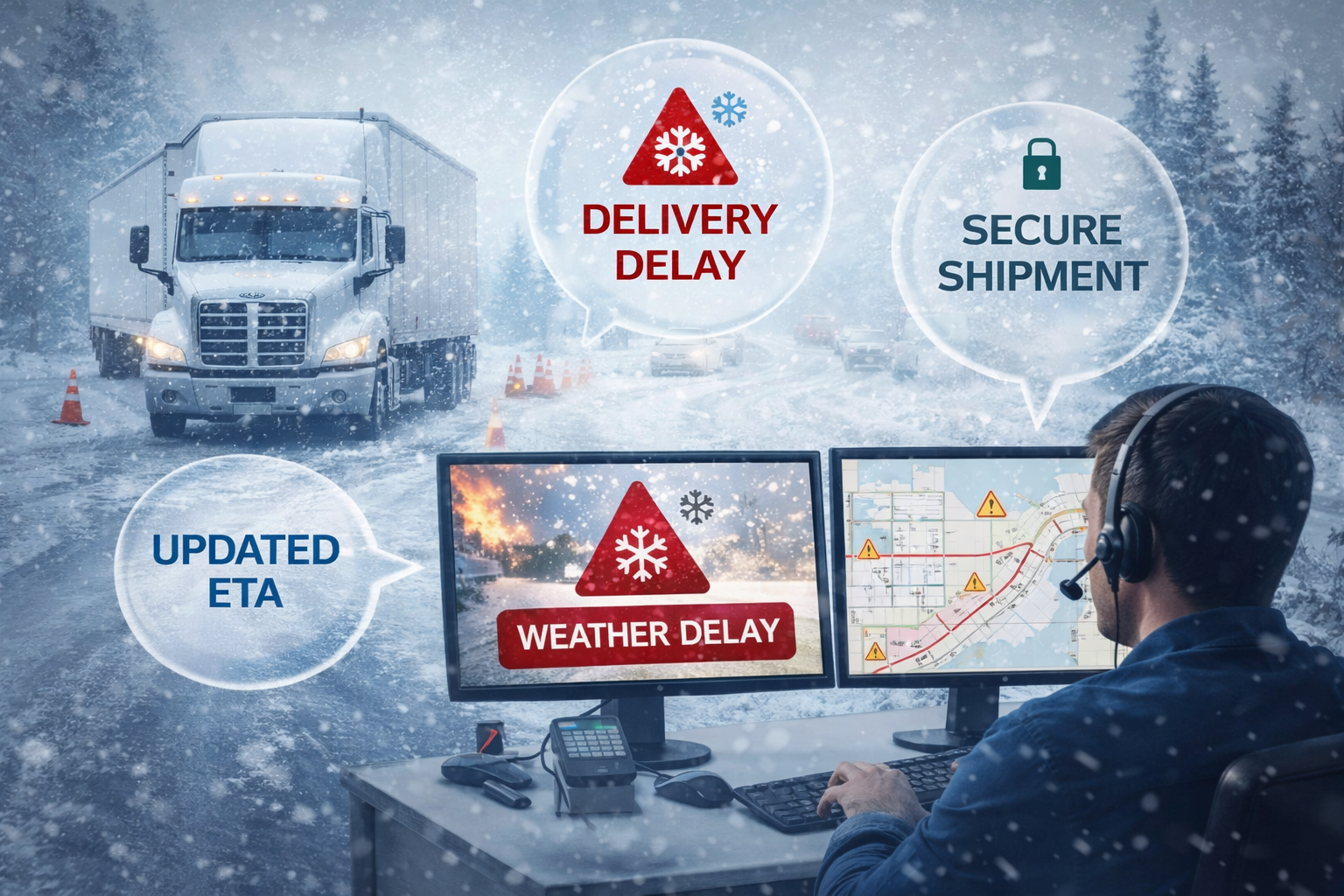
Driver and Dispatcher Coordination in Winter Monitoring
Good winter out comes occur when monitoring is being shared. Drivers observe the surface behavior; Dispatch sees the regional picture.
Great coordination means:
- Shared alert systems,
- Clear authority to stop or reroute,
- Frequent status updates,
- Aligned safety priorities.
The collaboration is the model when it comes to applying trip resources for winter conditions.
Establishing a Winter Monitoring Routine
Tools function only when they are used consistently. A winter monitoring routine transforms information into protection.
A good routine consists of:
- Pre-shift weather review,
- Radar checks during breaks,
- Restriction review ahead of major segments,
- Proactive schedule adjustments.
Routine minimises stress, decision fatigue, and exposure to severe weather tools overload.
Last Notes: Winter Safety = Information
Driving in winter isn’t something we can predict. The aim is not to predict correctly but to be ready.
When used consistently, winter weather monitoring tools, road safety tools, and winter travel resources work together to minimize risk exposure and support informed decision-making throughout the winter season.
The best tools to monitor weather and road restrictions in winter are not the solutions to the problem. These tools:
- Create a time offset,
- Provide options,
- Reduce the unknown,
- Aid security while driving in winter.
Safe driving is not about being the bravest on the road; it is about being the best informed.