Winter has always been regarded as a defensive season in the trucking industry. Prices go up and down, the weather changes schedules, and operating expenses quietly burrow into the profit line. A good fraction of the owner-operators spend winter months with a short-term perspective, thinking only about survival and not about the plan. However, if you do it wisely, the winter suite can be built effectively in the toughest season of all. The operators, who appear to be the strongest in the spring, are mostly the ones, who used the winter time to mitigate risk, establish stable freight lanes, and hedge margins.
Winter trucking tactics are based on discipline, lane consistency, and deliberate planning rather than speed or aggressive load chasing. This isn’t about chasing the highest-paying loads. It is rather identifying a route that has risk pregnancies, foreseen expense per mile, and fixed margins when cold weather adds driving challenges. Winter rewards better planning, conservatism, and strategic situations than swiftness or aggressiveness.
Why winter reshapes freight lanes for owner-operators
Winter is the season that alters the freight moving trends and the decision-making structures. Demand will not go away from the market, it will just become jarring. Some shippers will issue cutting volumes while some others will issue urgent ones because the weather is compressing the delivery windows. Capacity will shrink with the marginal trucks parking or skipping some regions thus creating local shortages.
These factors will show the weak lanes. Routes depending on timely delivery and strict schedules can be most vulnerable. Lanes built on predictability, infrastructure, and repeat demand are going to be stronger. For owner-operators, winter means the breakdown of complex freight patterns and the emergence of clearer forms.
Winter rate fluctuations often expose unstable lanes rather than signaling a true collapse of the freight market.
Winter rate changes often delude the operators into thinking that the market is unstable. Indeed, the instability usually lies in the poor decision of the lane instead of the market’s downfall. The operators, who concentrate on freight lanes rather than on individual loads see more well-defined patterns and act more temperately.
Grasping “less risk” in winter trucking
The risk in winter trucking is not just about a temporary snowfall. It has to do with the overall sum of exposures. Detours, delays, fuel waste, detention, and downtime stack together.
What actually creates winter risk for owner-operators
- Detours caused by weather-related road restrictions
- Delivery delays that trigger detention and missed reloads
- Increased fuel consumption during slow or stop-and-go driving
- Downtime caused by unsafe stopping conditions or breakdowns
- Cascading schedule disruptions after a single missed appointment
What defines a lower-risk winter freight lane
- Consistent road maintenance and winter infrastructure support
- Predictable traffic behaviour even during poor weather
- Flexibility from shippers when conditions slow transit
- Access to fuel, service, and safe parking during storms
- Operational stability that supports controlled decision-making
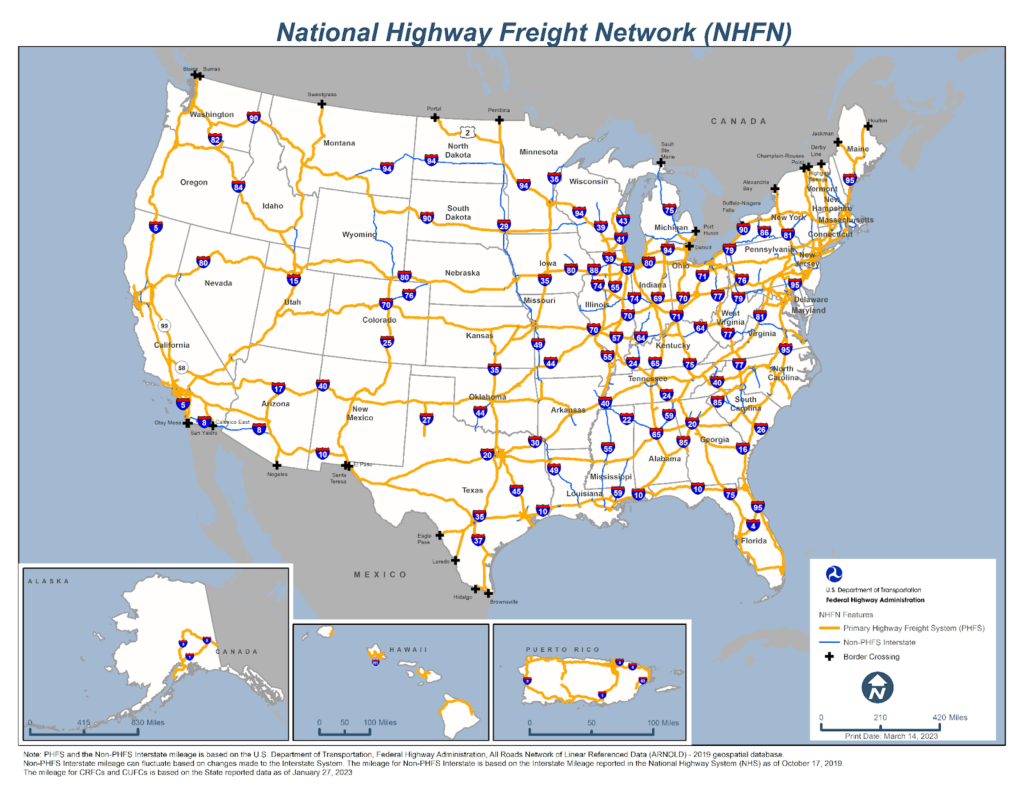
Map of shots. The low-risk winter freight lanes are the ones limiting how much impact any single disruption can cause.
A winter freight lane with low risks typically is the one that supports consistent infrastructure, behaves predictably and when the weather is not good, offers the owner-operator the chance to pause, communicate, and resume without losses cascading down in a row.
Location is important. However, infrastructure carry more weight than being north or south alone. A northern lane with good roadway and certain access maintenance may be less risk than a southern lane, which is not prepared at all for the rare cold happenings. Making the risk assessment concerning the operational condition rather than only the temperature leads to better winter decisions.
High-rate lanes versus high-margin lanes in low temperatures
One of the costliest mistakes that the owner-operators do during winter is simply equating the high rates with the profitability they make. This season serves the purpose of clarifying which lane pays and which lane it keeps.
High-rate lanes are those that always get most of the attention in situations of storms or capacity shortages. Generally, these lanes can be very attractive but, on the other hand, they also entail more fuel consumption, longer wait times, and stress among the crew. Any delay only serves to elevate per mile costs whether the rate remains the same.
In winter, owner-operators protect more margin by controlling execution and downtime rather than chasing peak spot rates.
On the other hand, the high-margin lanes are more focused on clean execution. They may cost less per mile, but they eliminate deadhead, over the schedule, and operational friction. All in all, these lanes outperform the variable spot runs during the carrying period.
Know this distinction; it lies at the core of maximum profitability. A winter-strong lane is one that is simply winter stable.
Winter lane comparison
| Lane type | Typical rate | Winter exposure | Margin outcome |
| Storm-driven spot lane | High | Delays, fuel burn, downtime | Unstable |
| Regional structured lane | Moderate | Predictable | Strong |
| Semi-dedicated lane | Stable | Low variance | Consistent |
Dedicated lanes as a winter stabilizer
During the winter months, dedicated lanes also take center stage. Although not all owner-operators can use formal dedicated contracts, winter offers opportunities for informal arrangements. The shippers, who have such uncertain channel capacities, need reliable carriers more than they need constructors with the aggressive pricing.
On the other hand, dedicated lanes will also help to reduce exposure against rate swings and it will make it possible to plan trucks, fuel and driver fatigue management, which will also be different. They will also lead to winter safety awareness through familiarity with the route and understanding the risks.
Partial dedication will also help to the same cause significantly. Guaranteed reloads, consistent weekly volume, or pre-agreed rate floors are going to reduce uncertainty and save the margin above all. Many dedicated relationships are long-term yet they often initiate in winter when reliability is crucial.
Winter lane structure for deadhead minimization
Deadhead, especially during winter, can turn out to be a huge cost and burden because they consumption time, fuel, and user expound their economic and environmental costs. Owner-operators who ignore the demurrage during the time cover risk on margins and lose profit.
The winter smart move is building freight loops rather than having linear runs. Regional lanes that circle back toward demand centers reduce empty repositioning and they also improve backhaul availability. Even though the outbound rates are likely to be a little softer the reliable backhauls will often make up for such losses.
Circular winter lane planning helps owner-operators minimize deadhead and stabilize cash flow.The matter of backhauls will become more significant than negotiating the best outbound rates. A reliable reload restores cash flow and at the same time, it reduces the recovery runs risk temptation after weather disruptions.
Successful winter operators deliberately strategize backhauls instead of relying on last-minute reloads.
Market demand and winter freight pattern
Winter demand is for freight that cannot wait for a long time. For instance, making goods, industrial inputs, and time-sensitive fresh stocks are examples of goods that continue moving wool regardless of the weather. These particular commodities usually are grouped with high-margin lanes as the shippers would instead trust them than saving rates.
Owner-operators, who have the knowledge of the market demand, can put themselves in places that are less affected by the disruptions. This anticipation leads to a good marginal position and also gives negotiating power in times of scarcity. The alternative route to moving freight for strategic operators will be positioning their trucks to places where the freight is bound to move to.
Market awareness is a defensive tool. By understanding which lanes are wintertime resilient, smarter decisions follow when the state of affairs worsens.
Truck preparation as a resource for margin protection
Winter truck preparation is a topic that is often discussed from a safety standpoint, but for the owner-operators, it is indeed a business tactic as well. Preventable breakdowns will cost more in the winter season than they could in other seasons because recovery options are limited, and delays cascade very fast.
However, in order to achieve these, the truck should be well prepared, which in fact promotes the safe driving in the winter and protects the freight commitments as well. The emergency kits, the readiness of the fuel system, battery health, and the tire condition influence reliability directly. A single unnecessary breakdown can cost the operator a whole route during winter.
5 ESSENTIAL Winter Driving Tips for NEW Truckers
According to official trucking safety guidance from the Federal Motor Carrier Safety Administration, operators should reduce speed and adjust following distance in hazardous winter weather to maintain safe truck control and prevent incidents that erode margin and reliability. FMCSA
Practical winter safety tips such as preventive maintenance and route familiarity directly protect margins.
The downtime math is brutal. The missed reloads as well as the loss of trust and forced spot repositioning all contribute to the rapid erosion of margin. An investment in trucking preventative things like early repairs is often returned multiple times because of continuity.
Cold weather driving and lane sustainability
Cold weather driving slows operations, increases fatigue and thus increases the pressure for making decisions. Lanes that require aggressive schedules or unfamiliar routes amplify these risks
. ❄️ Winter Driving Tips for Truckers: Stay Safe on Icy Roads!
The lanes that are sustainable in winter are the ones that let the operators adjust speed control, have space buffers, and stopping options.
Cold weather driving changes lane sustainability by increasing fatigue, decision pressure, and cost exposure.
To drive winter safely is not to move everywhere slow. It is to take the right path which a driver can manage the speed safely and wisely without penalties. The lanes which punish the diligent risk takers are the ones that cost more than they pay.
Safe winter driving depends on choosing lanes that allow controlled speed adjustments and operational flexibility.
The owner-operators who choose their lanes according to the actual winter driving conditions protect their profit and their long-term health.
Choosing high-margin routes in the winter
High-margin winter lanes seldom are in places with good weather, as might be imagined. Low climates usually attract excess capacity, turn down rates, and so on. The areas that have reliable winter conditions and good infrastructure might be the ones that give a better balance both on reward and risk.
Evaluating the regions on the basis of infrastructural reliability, service availability, and shippers’ behavioral patterns gives better results than the chase for comfort. Predictable slowdowns are easier to manage than sudden disruptions.
The region’s strategic picking is part of the business winter strategy and is not just a route preference.
Cost per mile as a winter decision tool
Typical winter CPM shifts
| Cost element | Normal season | Winter impact |
| Fuel | Stable | Increased |
| Idling | Minimal | Higher |
| Maintenance | Predictable | Spikes |
| Detention | Controlled | Variable |
In the winter, gross revenue becomes meaningless if it is not introduced with the cost per mile. Fuel burn increases, idle time expands, and maintenance costs spike. Without the CPM of visibility, the losses will accumulate unnoticed.
The weekly CPM tracking will provide early warnings for the ones who follow the patterns closely. The increasing fuel consumption, detention trends, and most often maintenance frequency will be the first that reveals the trouble. The operators who check their weekly CPM will make the necessary adjustments faster and they will get rid of the routes that are not profitable quicker.
On the contrary, winter spurns intuitiveness. It is rather through data-based decisions that margins will be protected.
Utilizing winter lanes as a step to long-term asset creation
Winter lanes shouldn’t be something to just get through the winter with. They have.the capacity of being the laboratories where they may be tested as they are for structure sustained into the long term. Channels that withstand the winter stresses, will likely do even better in the spring and summer seasons.
The winter lanes that can be relied upon will be a basis for recurring contracts. They will provide the operator with confidence in their performance and also benchmark their pricing. Such flows, in their nature, will move the owner-operators from a reactive spot hauling to planning structured freight.
Lane building is a cumulative process. In the spirit of winter, reward is for perseverance and discipline, not for ceaseless renewal.
Typical winter errors owner-operators still repeat
Although they have several years of experience, many operators are still making winter mistakes. The most relevant are-bids for rates without evaluating the risk, winter prep neglect out of savings, or driving free lanes due to storms that often lead to the margin loss.
Another one of the common mistakes is the fact that the operators fail to grasp how driving in cold weather affects their cost per mile. Having to deal with slower speeds, longer idling, and more pressure all need to make it into the pricing decisions. Overlooking these factors often turns good lanes into loss leaders.
Improving the bottom line through mistake avoidance can often be more effective than discovering new opportunities.
Winter lane-building as stress relief
Aside from numbers, the structured winter lanes also lower the mental load. Winter driving already needs more attention. Financial instability blurs focus and overloads decision making.
The defined lanes mean fewer spur-of-the-moment decisions and a more thorough planning for the rest period. Owner-operators who work under-order operate in structure and thus they experience lower stress, additional sleep, and better optimizations
The lane discipline is protective both of margin and sustainability.
To sum up
Winter does not reward improvisation. It rewards order, preparation, and a thoughtful business strategy. The owner-operators who make lanes rather than hunt them find out that winter could have been a season of consolidation instead of waste.
Winter course freight lanes if directed by the business owners to the right direction with less risk, a controlled cost per mile, and recurring structures will, indeed, be the right means to increase margins and stabilize the business into the long run. The ones who think of the winter season as a possible lane building time are likely to find it in the spring with healthier finances, safer operations, and clearer visibility.