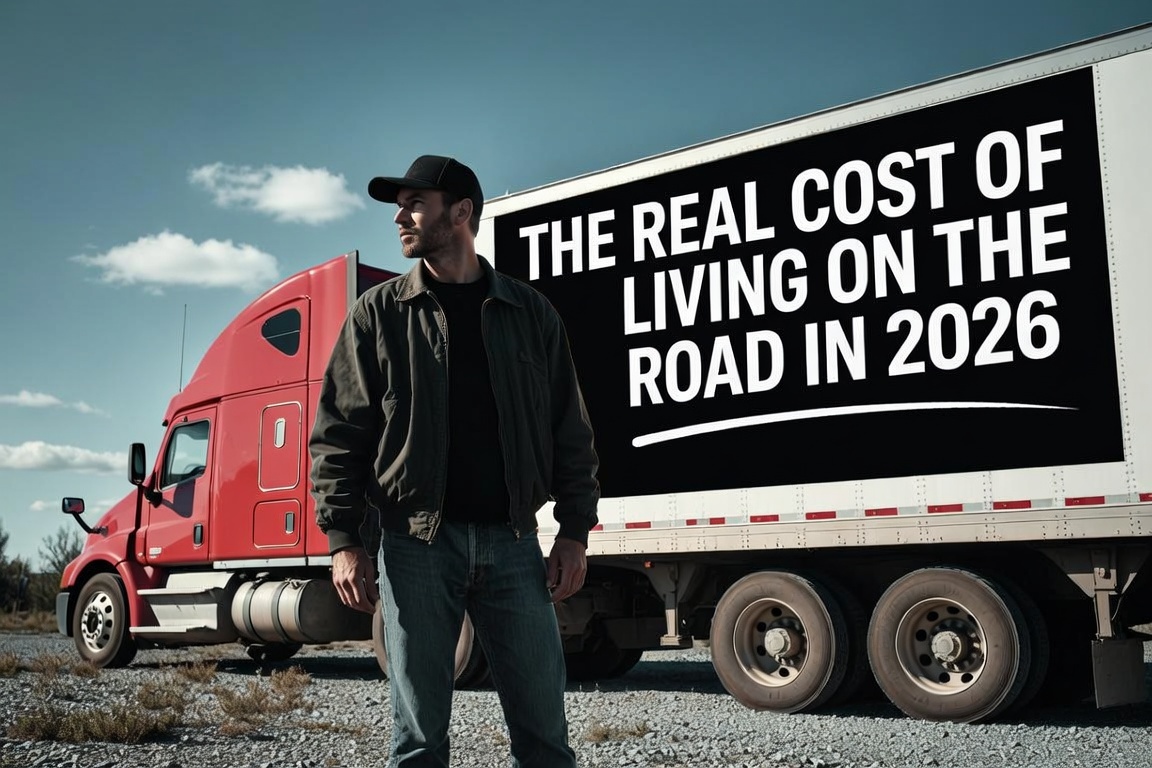
Long-haul trucking and weight gain often go together. Long hours sitting, limited healthy options, irregular sleep, and constant access to high-calorie truck-stop food make it easy to put on pounds. Official data backs this up: research from the National Institute for Occupational Safety and Health (NIOSH) has shown that long-haul truck drivers have significantly higher rates of obesity than the general U.S. working population — in one major survey, about 7 in 10 long-haul drivers were obese.
Obesity raises the risk of diabetes, high blood pressure, sleep apnea, and other conditions that can affect your CDL medical certification and long-term health. The good news is that many drivers are losing weight without giving up fast food completely. The key is smarter choices, better portions, and small consistent habits that fit real road life.
Here’s what actually works for truckers in 2026.
1. Make Fast Food Work for You Instead of Against You
You don’t have to quit the drive-thru. You just need better defaults.
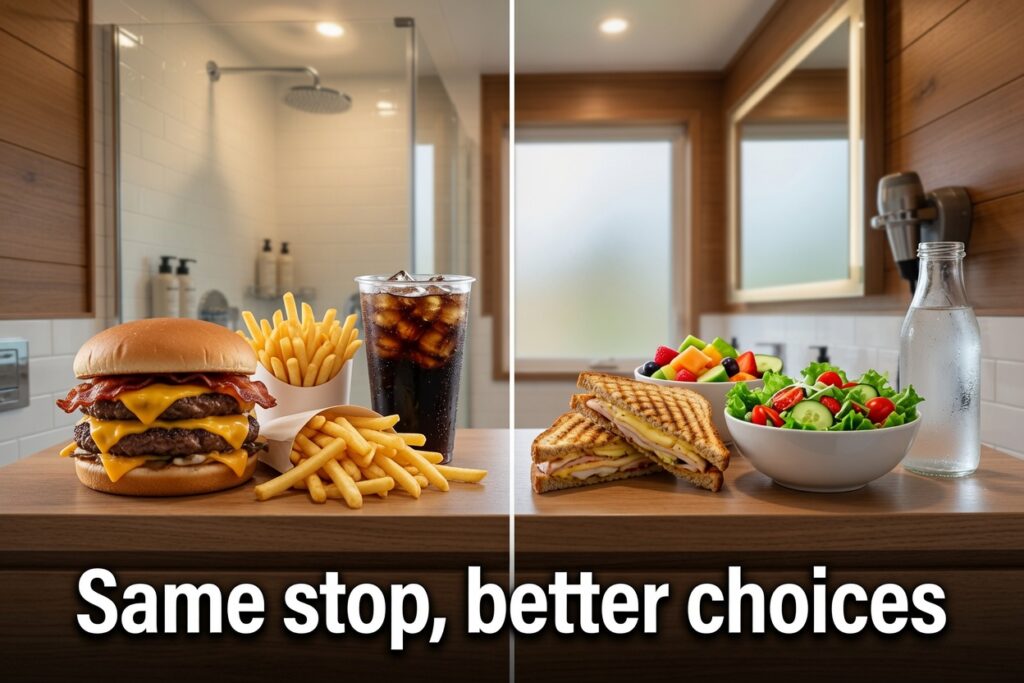
Practical swaps that drivers use successfully:
- Choose grilled chicken, grilled sandwiches, or plain burgers instead of fried or double-stacked options.
- Skip the large fries and large sugary drinks. Order a small or share, or swap fries for a side salad or fruit cup when available.
- At places like Chick-fil-A, McDonald’s, Wendy’s, or Subway, go for grilled items, smaller sizes, or loaded-with-vegetables options.
- Always drop the soda or sweet tea. Switch to water, unsweetened iced tea, or black coffee. Liquid calories are one of the easiest places to cut hundreds of calories per day.
These changes alone can remove 300–700 calories from a typical truck-stop meal without feeling like deprivation.
2. Control Portions and Frequency
Even “better” fast food becomes a problem when it’s every meal, every day.
Drivers who lose weight often follow a simple rule:
- Limit full fast-food meals to once or twice a day.
- Make one or two meals come from a cooler or simple prep (hard-boiled eggs, Greek yogurt, turkey wraps, tuna packets, fruit, or leftovers).
- When you do order fast food, eat only part of it or choose the smaller size deliberately.
The CDC recommends gradual weight loss of about 1–2 pounds per week for sustainable results. Tracking what you actually eat for a few days (phone notes or a simple app) helps most people see where the extra calories hide.
3. Move in Short Bursts That Fit HOS
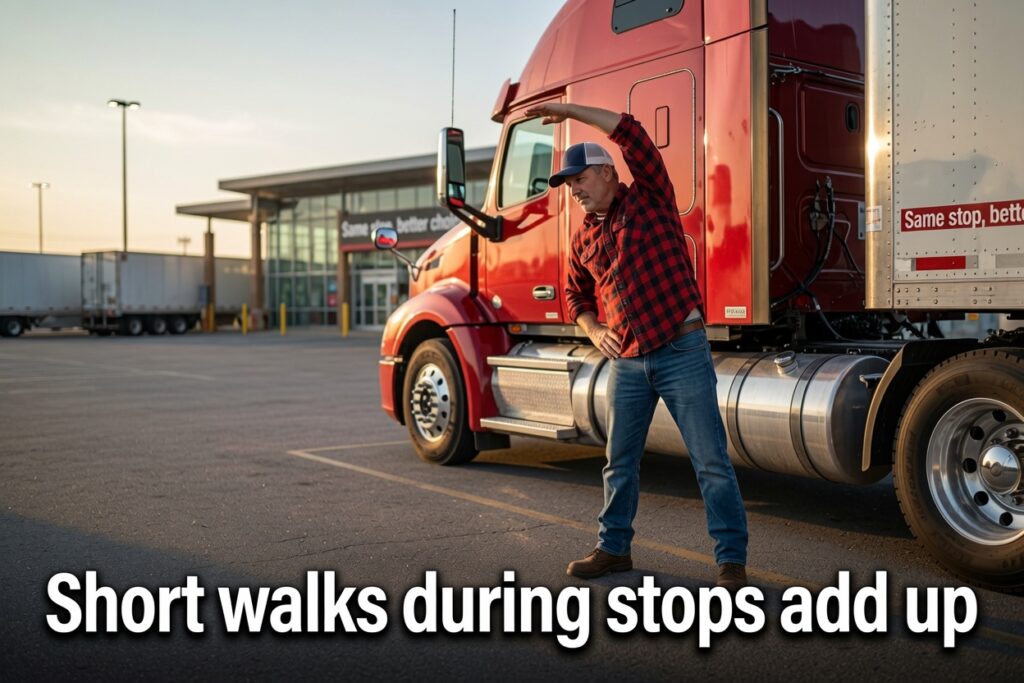
You don’t need a gym. CDC guidance for adults is at least 150 minutes of moderate activity per week. For truckers, that can look like three short 10-minute walks a day.
Real tactics that work on the road:
- Walk the parking lot or around the truck during every fuel or rest stop (even 5–10 minutes counts).
- Park farther from the entrance when possible.
- Do simple bodyweight moves next to the truck: squats, wall push-ups against the trailer, or marching in place during longer waits.
- Use the 10-hour break for a longer walk when the location is safe.
Movement improves energy, sleep, and calorie burn without requiring big schedule changes.
4. Prioritize Protein and Cut Liquid Calories
Protein helps you feel fuller longer and protects muscle while losing fat. When you do hit fast food, build the meal around protein first (grilled chicken, eggs, lean meat) and treat the carbs as secondary.
Sugary drinks are a silent weight-gain driver. Replacing one or two sodas or energy drinks per day with water is one of the highest-impact changes many drivers report.
5. Use Simple Tracking and Consistency Over Perfection
Drivers who succeed rarely follow perfect diets. They track weight weekly (same scale, same conditions when possible), notice patterns, and adjust. Some use free apps or just a notebook. Others set one or two clear weekly goals, such as “no soda” or “walk at every stop.”
Programs designed for truckers (including some mobile coaching and self-monitoring approaches studied by researchers) have shown that consistent self-monitoring of weight and behaviors is one of the strongest predictors of success.
What Realistic Progress Looks Like
Expect slow, steady results — 4–8 pounds in the first month is common and sustainable when habits stick. Faster loss often rebounds. Focus on how clothes fit, energy levels, blood pressure numbers at the next DOT physical, and overall how you feel behind the wheel.
Bottom Line
You do not have to quit fast food to lose weight as a trucker. You need better choices at the places you already stop, smaller portions more often, short daily movement, and consistency over perfection. The same environment that makes weight gain easy can also support weight loss once you treat it as a set of controllable decisions instead of an all-or-nothing fight.
Start with one change this week — usually the soda or the walking rule — and build from there. Your health, your medical card, and your energy on the road are worth it.