In the trucking industry, defensive driving can be described in its simplest form as just slowing down; this is the perspective that is often adopted. This way of looking at things is reflected in many of the training programs and safety briefings that the trucking industry usually has. It is perfectly rational and free of bias, practically doable, and can be put into practice right away. Nonetheless, one’s time in trucking indicates that the single variable affecting speed cannot determine the safety level. The facts of the matter are that many accidents happen at low speeds while 1000s of miles are driven safely at full speed under condition and plan considerations in the right way.
This contrast is at the core of the ongoing safety comparison between driving slower effectiveness and more advanced defensive methods.
This brings up the question every truck driver and fleet manager needs to deal with: is driving slower really the most effective defensive driving strategy, or does the delivery planning of windows provide more safety, delivery efficiency, and operational stability?
This question also defines the debate around planning delivery windows effectiveness in real-world logistics operations.
The reason for this is that defensive driving refers to risky driving and stress driving but is not separated directly from it. In this light, it should not be exclusive as just a behavior instead it is viewed as an operational system where time management, route planning, and driver behavior interact with each other continually.
Seen this way, defensive driving becomes part of logistics optimization rather than an isolated safety habit.
Defensive Driving as a System, Not a Reaction
Usually, defensive driving is conceptualized as a response to a danger. As dangerous conditions become apparent, drivers react by slowing down, increasing the following distance, and thus, becoming more careful. However, while these are valid reactions, they only occur once the driver has already gone into a risky situation. Instead, a better type of defensive strategy attends to the risk before it takes place.
This shift reflects the difference between reactive driving and strategic planning.
In this light, the answer is reverse. Instead of a reaction it is a pre-emptive strike. Safety is more in the driver’s hand than the day-to-day control of reaction; it is a strategic plan. It is about when the truck runs, where the truck runs, and what the condition of the truck is when it runs.
This approach aligns with best defensive strategies used in modern fleet and courier strategy models.
Movement starts from the decision about safety and not from the problem of the driver.
Such strategic planning directly supports safer driving outcomes under variable conditions.
The salient elements forming driving defensively as a system are as follows:
- the time structure with respect to delivery windows
- the action of route selection and the related traffic exposure
- psychological pressure on the driver
- the synchronization of schedule and real-world conditions
Together, these elements define operational efficiency rather than just driving technique.
Advantages of Driving Slower
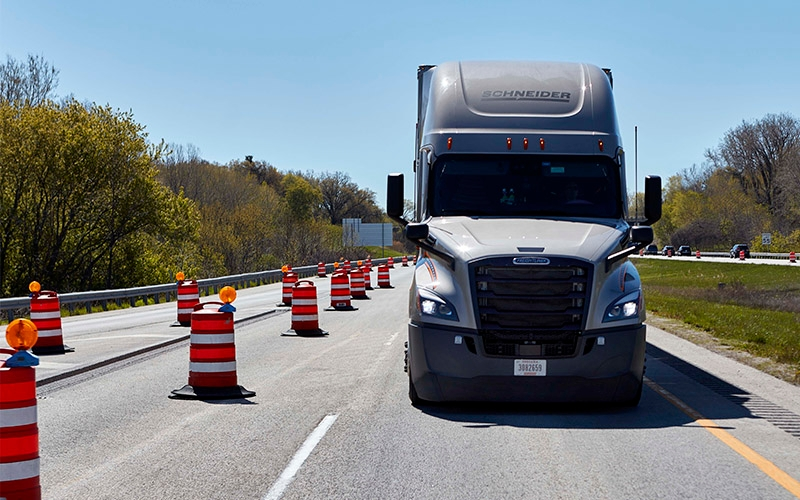
There are many pros to driving slower: it is straightforward and totally under the driver’s control. Slower driving gives the driver more time to react, a greater braking margin, and a more sense of vehicle control. In adverse weather, heavy traffic, or unfamiliar places, slow motion visualization is a major benefit of traffic safety. It reduces drivers’ stress and helps find easy ways to navigate through multiple drives complex intersection at one time.
In such situations, driving slower effectiveness is clearly measurable and beneficial.
Nonetheless, choosing slower driving as the main resource in cases of dealing with high difficulty conditions has certain shortcomings.
Relying on speed alone can reduce operational efficiency when applied universally.
Where Driving Slower Works Best
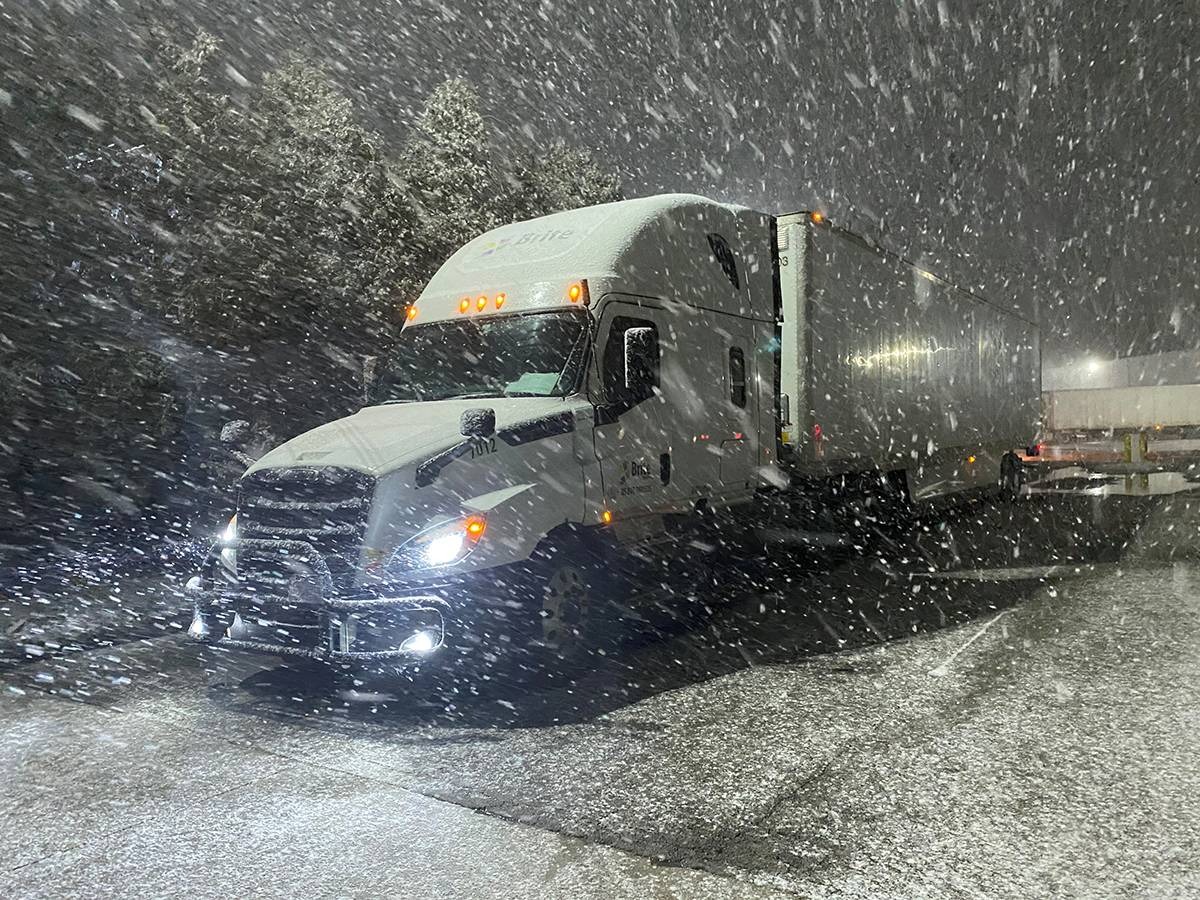
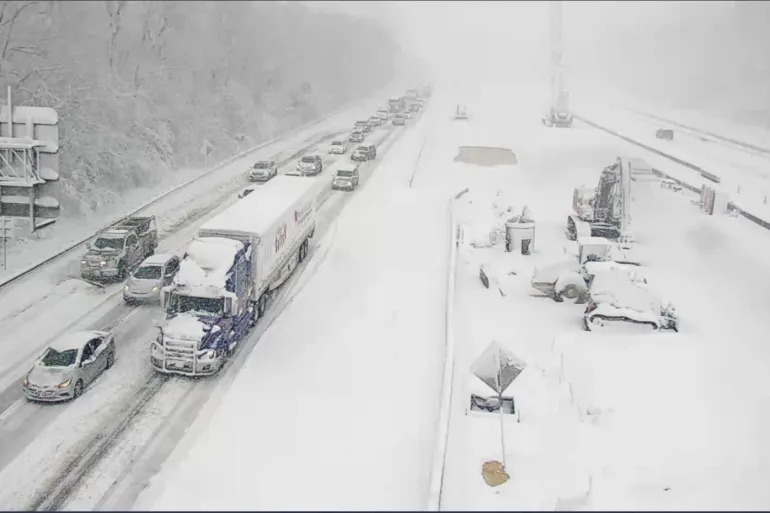
During heavy rain, fog, snow, and other extreme weather conditions in construction areas or dense downtown areas where drivers are surrounded when there are mechanical limitations when roads are not well-known or the risk is high.
These cases highlight that slower speed is a tactical tool, not a complete courier strategy.
Although tactical usage of slower driving is good, it is not competent to solve the strategic challenge on its own.
Where Driving Slower Falls Short
Time pressure doesn’t vanish when speed is simply decreased. When the delivery window stays the same, which is the case with a slower trip, time pressure is simply transferred to later parts of the journey. Drivers regularly perform corrective actions by hurrying at the end of the trip, skipping rest, or taking aggressive decisions in the vicinity of unloading. In such instances, the risk isn’t eliminated; it is postponed.
This trade-off directly impacts cost efficiency and long-term delivery performance.
The longer trip period results in more exposure to monotony, principally during night driving or long highway runs. The influence of mental fatigue is very straightforward on driver behavior, decision making, and alertness.
At this point, slower driving no longer guarantees safer driving outcomes.
In operational terms, driving at a lower speed without changing schedules decreases both the efficiency of deliveries and contributes extra costs. This creates discrepancy between productivity requirements and safety expectations.
Slower Driving as a Defensive Strategy
| Aspect | Positive Effect | Limitation |
| Vehicle control | Better reaction time and braking | Does not remove time pressure |
| Immediate safety | Useful in hazardous conditions | Risk shifts later in the trip |
| Driver stress | Lower in the moment | Can increase fatigue over time |
| Operational impact | Simple to apply | Reduces operational efficiency |
Planning Delivery Windows as Preventive Safety
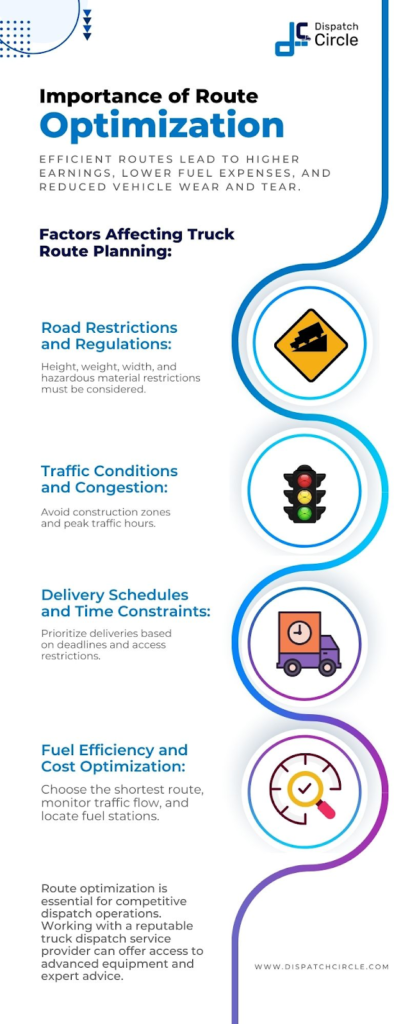
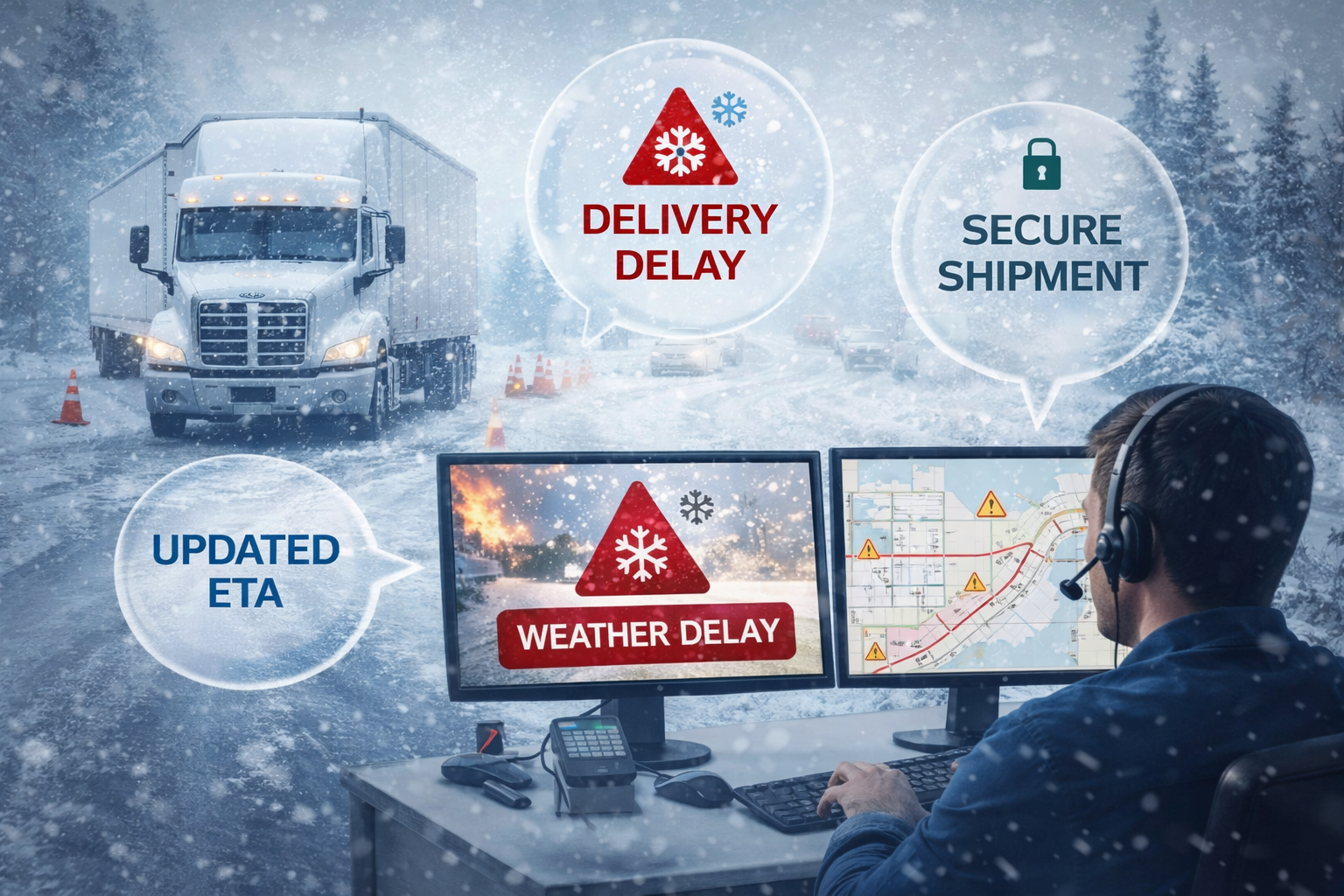
Planning delivery windows takes a different approach to safety.Rather than reacting to hazardous situations on the road, it primarily concerns creating a safe environment where such hazards do not arise. An effective delivery strategy would depart at times that traffic conditions allow, avoid peak rush hours, consider adverse weather, and build buffer time into planning.
This is a core element of planning delivery windows effectiveness in transportation systems.
Top 6 truck driver trip planning tips
When delivery windows are planned rightly, driver behavior changes spontaneously. Speed becomes a flexible tool rather than a necessity. Making decisions becomes easier as drivers no longer feel they are racing against the clock.
This improves both safer driving and overall operational efficiency.
Planning Delivery Windows and Safety Impact
| Planning Factor | Safety Benefit | Operational Result |
| Flexible delivery time | Reduced driver pressure | More stable delivery performance |
| Traffic-aware scheduling | Lower exposure to congestion | Improved delivery efficiency |
| Weather buffers | Fewer forced decisions | Better risk mitigation |
| Dock coordination | Less last-mile stress | Higher productivity |
Driver Behavior Under Time Control vs Speed Control
This difference is critical. Driving slower primarily controls vehicle behavior. Planning delivery windows controls driver behavior. This distinction defines the real safety comparison between the two approaches.
Most accidents are not sole vehicle lack of control but are poor decisions made under pressure. One of the most powerful safety interventions available is removing that pressure through strategic planning.
Without urgency, driving becomes more predictable, fatigue is managed better, and situational awareness improves.
This is where logistics optimization directly supports human performance.
Timing vs Speed in Risk Management
| Scenario | Driving Slower | Planning Delivery Windows |
| Urban congestion | Limited benefit | Major risk reduction |
| Mountain routes | Helps control | Avoids exposure |
| Night driving | Extends fatigue | Reduces fatigue |
| Last-mile delivery | Minimal impact | High effectiveness |
Fleet Management Perspective
From a perspective of fleet management, planning the delivery of windows has far broader benefits than just speed control. It leads to fewer incidents happening, stable delivery performance, predictable schedules, lower insurance costs, and improved driver retention.
This approach directly improves cost efficiency across the operation.
Driving slower may safeguard the vehicle on individual trips, but planning delivery windows protects the entire transportation system.
Last Mile Delivery: Timing Over Speed
In the last mile delivery environment, the impact of speed reduction is limited. Urban density, pedestrian traffic, and dock congestion mean that exposure time matters more than velocity. Spending hours creeping through traffic is not safer than completing deliveries during low-traffic windows.
Here, planning delivery windows effectiveness clearly exceeds driving slower effectiveness.
Final Judgment

Driving noticeably slower has a place. In poor weather, reduced visibility, construction zones, or mechanical limitations, speed reduction remains essential.
The error is to substitute all defensive thinking with reduced speed alone instead of combining it with strategic planning.
The most effective defensive approach integrates both methods:
- delivery windows eliminate time pressure
- speed control manages unavoidable risk
When comparing the two, planning delivery windows proves to be the more efficient defensive strategy. It removes risk proactively, improves operational efficiency, and supports long-term productivity.
Defensive driving is not simply about moving slower.
It is about moving deliberately, intelligently, and without pressure — with foresight rather than reaction.
Mini-FAQ

1. Is it possible to drive a truck more safely just by reducing speed?
Lowering the speed of a truck
Bringing the speed of a truck down to lower levels is a good way to improve vehicle control, but it has to be said that it is not a self-sufficient solution to the issue of road safety. To stay on the schedule, the consequences of what should have been a slower speed were a trip pressure which was stronger at the end of the ride. This pressure can lead a driver to be fatigued, make hasty decisions as well as not considering risks properly.
2. Why are delivery windows safety factors in addition to a planning tool?
Delivery windows are time limits that a driver has to take. The decrease in urgency by a well-planned window results in the passing of time in a better way. It also leads to an improvement in the judgment, consistency, and an increase in the ability of a driver to respond calmly to the changing of road conditions.
3. Is it successful to set delivery windows by this method that the risk is avoided, rather than learning defensive driving?
Managing the delivery brow of the window is such a function that it is mainly done before the trip starts, while driving techniques are personal management measures for the truck driver while driving. The most effective road safety can be obtained through the combination of both methods rather than selecting just one.