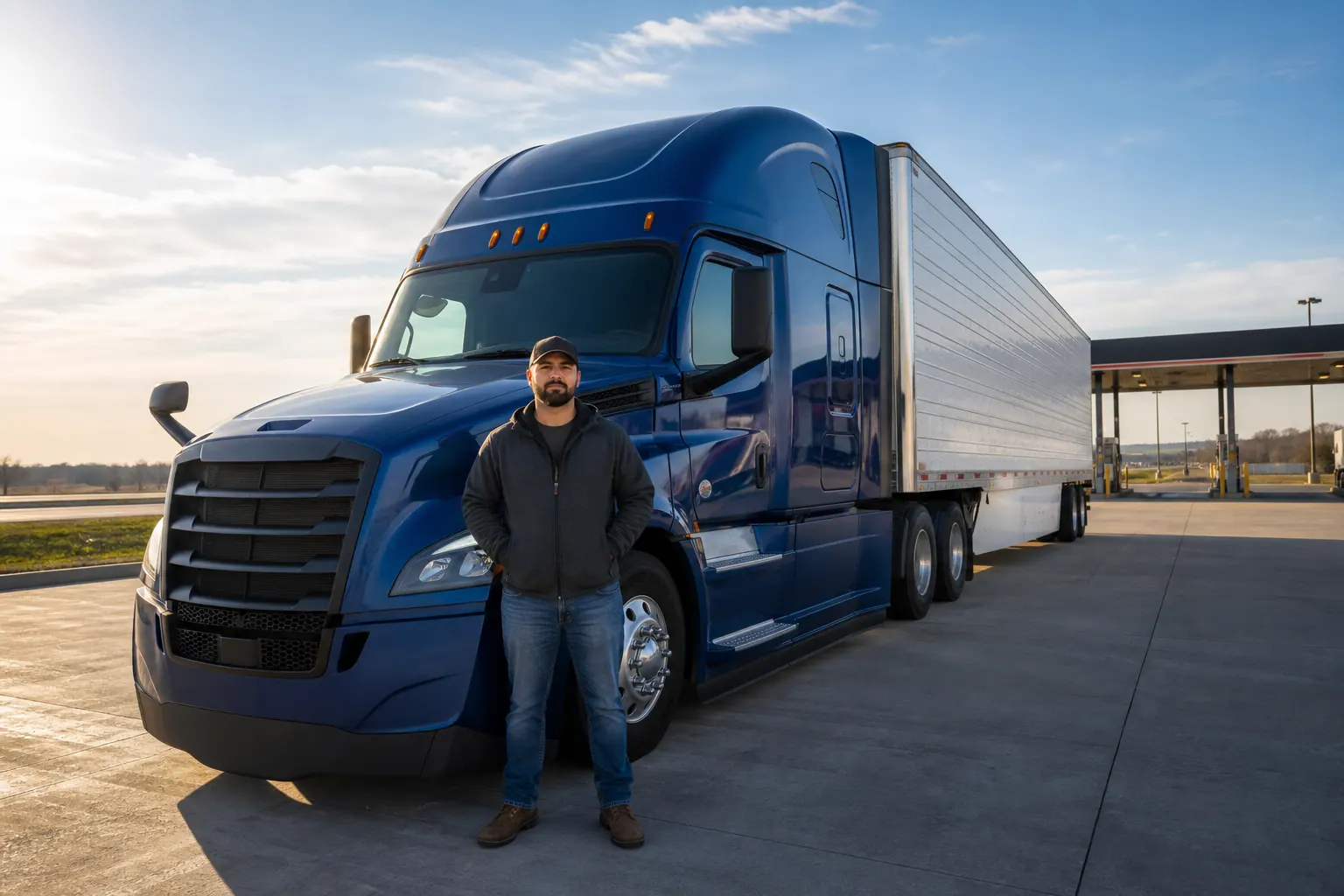
If you are planning to become a professional truck driver in the United States, one of the first terms you will hear is CDL. A Commercial Driver’s License is one of the most important requirements for anyone who wants to operate large commercial vehicles professionally.
A regular driver’s license allows you to drive passenger cars and light vehicles, but it does not qualify you to operate most heavy trucks, tractor-trailers, buses, or certain vehicles carrying hazardous materials.
Understanding what a CDL is, which type you need, and how to obtain one is an essential first step toward starting a career in the trucking industry.
What Does CDL Mean?
CDL stands for Commercial Driver’s License.
It is a special type of driver’s license required to operate certain commercial motor vehicles in the United States. Although federal regulations establish minimum CDL standards, licenses themselves are issued by individual states.
The Federal Motor Carrier Safety Administration (FMCSA) establishes federal standards for commercial driver licensing and defines the major CDL vehicle classes.
A CDL demonstrates that a driver has the knowledge and practical skills required to safely operate large or specialized commercial vehicles.
Depending on the type of CDL and endorsements you hold, you may be able to drive vehicles such as:
- Tractor-trailers
- Semi-trucks
- Straight trucks
- Dump trucks
- Large delivery trucks
- Tanker trucks
- Passenger buses
- School buses
- Vehicles transporting certain hazardous materials
For someone interested in long-haul trucking or becoming an over-the-road truck driver, a Class A CDL is generally the most relevant option.
Why Do Truck Drivers Need a CDL?
Commercial trucks are much larger, heavier, and more difficult to operate than ordinary passenger vehicles.
A fully loaded tractor-trailer can require significantly more space to accelerate, maneuver, and stop. Commercial drivers must also understand vehicle inspections, braking systems, cargo considerations, railroad crossings, blind spots, emergency procedures, and many other safety-related topics.
The CDL system is designed to ensure that drivers operating these vehicles meet specific knowledge and skills standards.
Without the appropriate CDL, you generally cannot legally operate a vehicle that falls within federal CDL classifications.
For professional truck drivers, having a CDL is also one of the basic qualifications employers look for when hiring drivers.
The Three Main CDL Classes
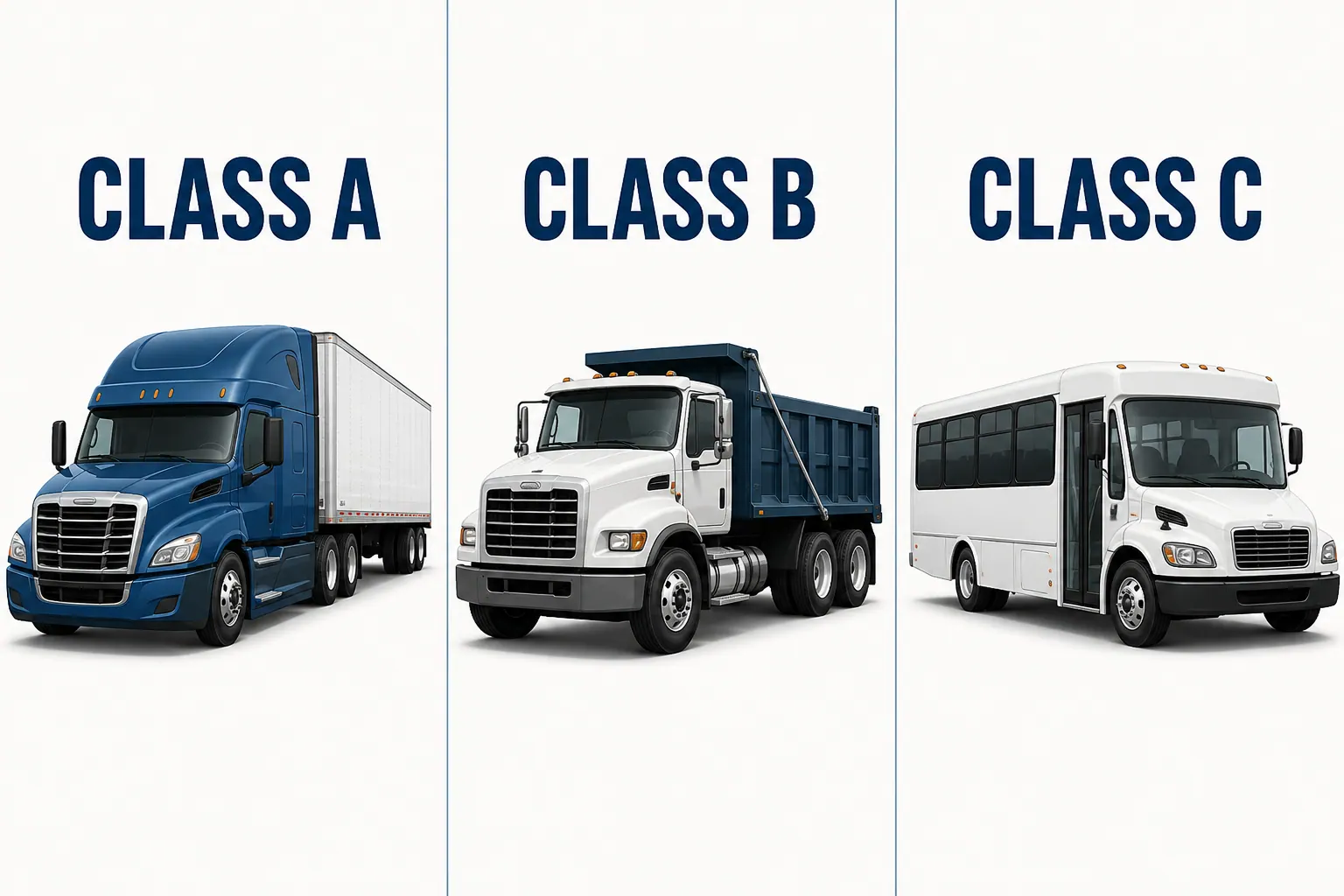
There are three primary CDL classes in the United States: Class A, Class B, and Class C.
The correct license depends mainly on the type and weight of vehicle you intend to operate.
Class A CDL
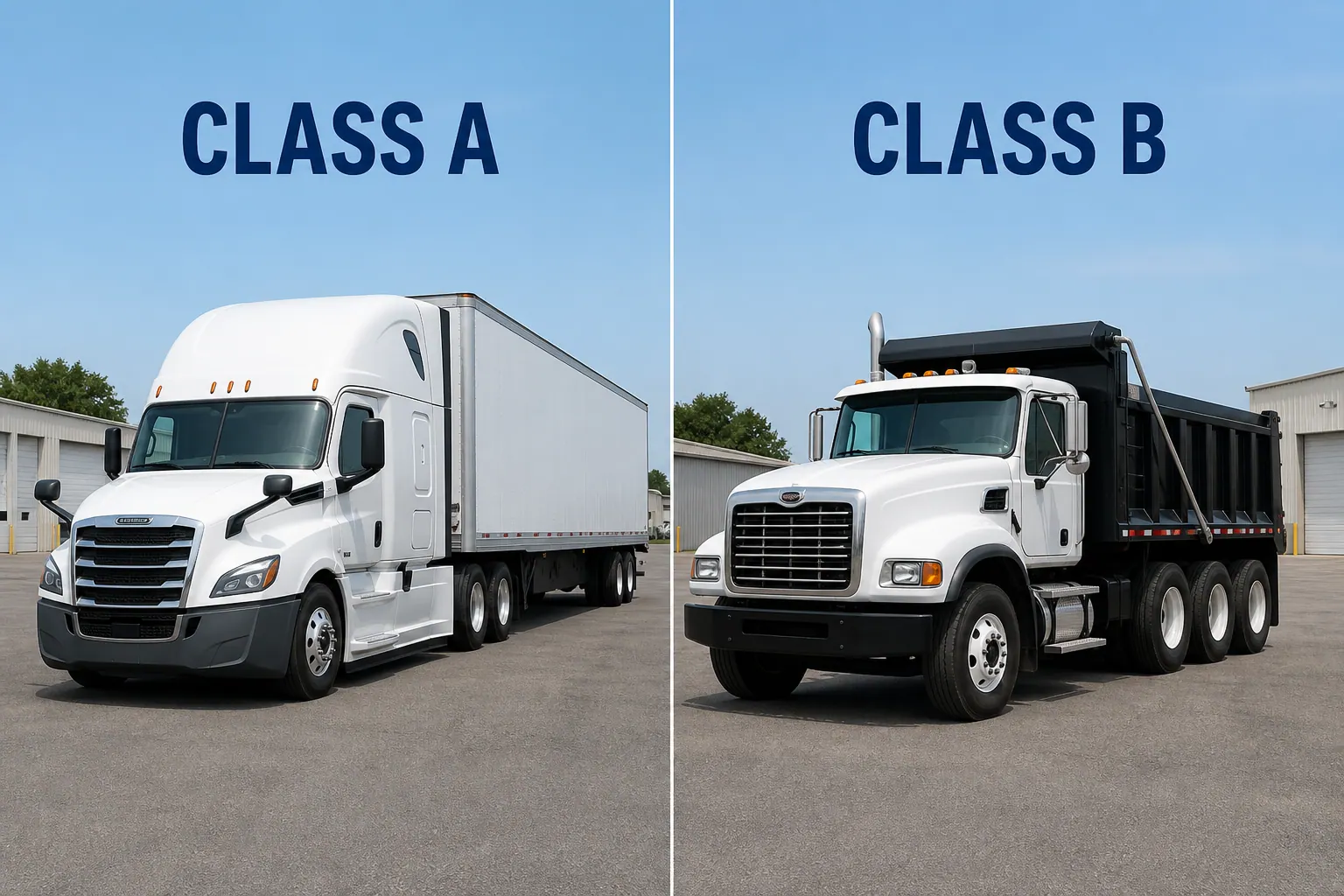
A Class A CDL generally covers combinations of vehicles with a gross combination weight rating or gross combination weight of 26,001 pounds or more, provided the qualifying towed unit is more than 10,000 pounds.
This is the license commonly associated with tractor-trailers and long-haul trucking.
Typical Class A vehicles include:
- Tractor-trailers
- Semi-trucks
- Truck and trailer combinations
- Flatbed trucks with heavy trailers
- Tanker combinations
- Certain livestock carriers
Class A is often considered the most versatile CDL because, with the proper endorsements and without applicable restrictions, it can qualify a driver for a wide variety of commercial vehicles.
If your goal is to become an interstate or long-haul truck driver, this is usually the CDL class you will want to research first.
Class B CDL
A Class B CDL is generally used for a single vehicle with a GVWR or gross vehicle weight of 26,001 pounds or more, or such a vehicle towing another vehicle that does not exceed 10,000 pounds under the federal classification.
Typical examples may include:
- Straight trucks
- Large box trucks
- Dump trucks
- Large delivery vehicles
- Some buses
- Certain garbage trucks
Class B drivers often work in local or regional jobs where tractor-trailers are not required.
Class C CDL
A Class C CDL covers certain commercial vehicles that do not meet the Class A or Class B definitions but are designed to transport 16 or more passengers, including the driver, or are used to transport certain regulated hazardous materials.
Examples can include:
- Certain passenger vehicles
- Small buses
- Some vehicles transporting hazardous materials
The required endorsements will depend on the vehicle and the work being performed.
CDL Endorsements Explained
Your CDL class is not always enough by itself.
Some commercial driving jobs require additional qualifications called endorsements. An endorsement shows that you have met additional requirements for a specific vehicle or type of operation.
Common endorsements include:
H — Hazardous Materials
Required for certain vehicles transporting hazardous materials that require placarding.
N — Tank Vehicles
Used for drivers operating qualifying tank vehicles.
P — Passenger
Required for drivers operating qualifying passenger vehicles.
S — School Bus
Required for operating a school bus in applicable circumstances.
T — Double/Triple Trailers
Allows qualified drivers to operate double or triple trailer combinations where permitted.
X — Tank Vehicle and Hazardous Materials
Combines tanker and hazardous materials qualifications.
Depending on the endorsement, drivers may need to pass additional knowledge or skills tests and meet other requirements.
For example, first-time applicants for Hazardous Materials (H), Passenger (P), and School Bus (S) endorsements are among those covered by federal Entry-Level Driver Training requirements.
What Is a Commercial Learner's Permit?
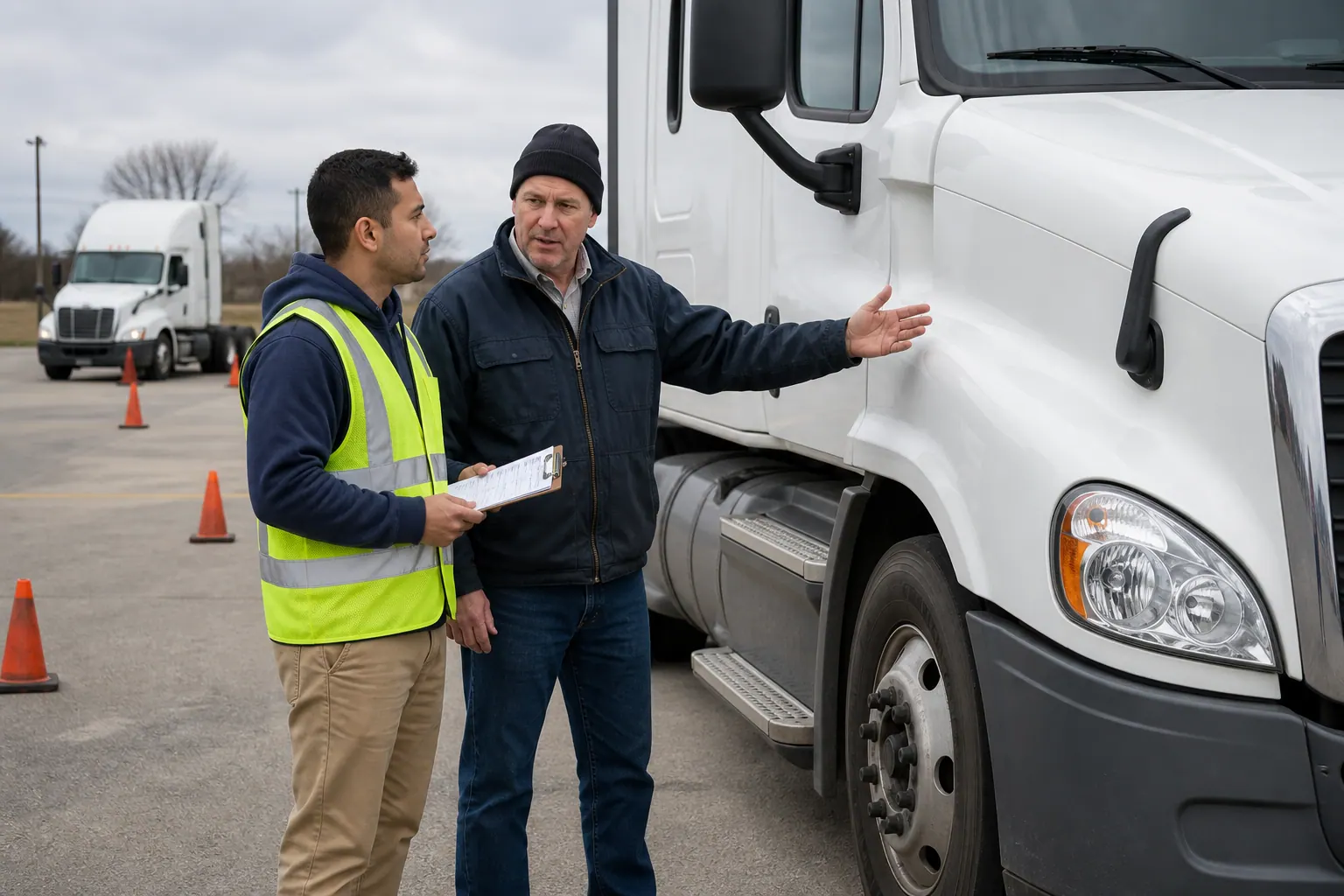
Before receiving a full CDL, many new drivers first obtain a Commercial Learner's Permit (CLP).
A CLP allows an individual to practice operating the applicable class of commercial motor vehicle while accompanied by a qualified CDL holder, subject to applicable rules.
Think of it as the commercial-driving equivalent of a learner's permit.
Applicants generally begin by studying their state's CDL manual and passing the required knowledge examinations.
The FMCSA recommends starting with your state's CDL manual because individual states have their own licensing processes in addition to federal requirements.
What Is Entry-Level Driver Training?
New drivers should also understand Entry-Level Driver Training, commonly called ELDT.
Federal ELDT requirements apply to drivers who are:
- Obtaining a Class A CDL for the first time
- Obtaining a Class B CDL for the first time
- Upgrading from a Class B CDL to a Class A CDL
- Obtaining an H, P, or S endorsement for the first time
When ELDT applies, the required training must be completed through a provider listed on the FMCSA Training Provider Registry before the applicant can take the applicable CDL skills test or, for the H endorsement, the applicable knowledge test.
These federal requirements have applied since February 7, 2022.
States can also impose requirements that go beyond the federal minimum, so drivers should always verify the rules with their state licensing agency.
How Do You Get a CDL?
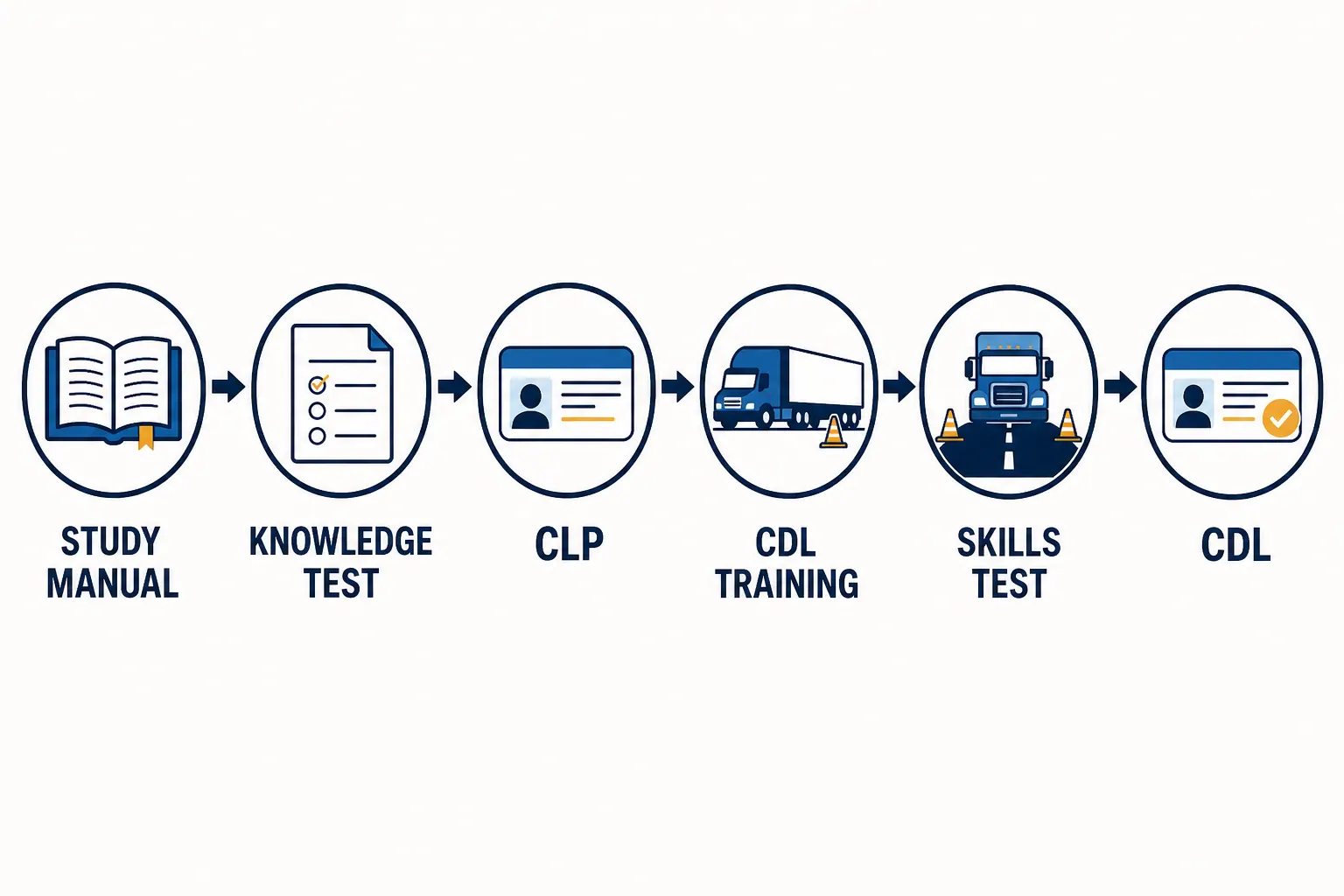
The exact licensing process varies somewhat from state to state, but the basic path usually follows several major steps.
1. Decide Which CDL Class You Need
Start by determining what kind of commercial vehicle you want to drive.
Someone planning to drive tractor-trailers will typically pursue Class A, while a driver interested in certain straight trucks may only require Class B.
2. Study Your State CDL Manual
Every state provides a CDL manual explaining the rules, tests, vehicle classes, endorsements, and other licensing requirements.
This should be one of the first resources you study.
3. Meet Medical and Eligibility Requirements
Commercial drivers may be subject to medical and other eligibility requirements depending on the type of operation.
FMCSA specifically notes that obtaining a CDL involves medical and residency requirements in addition to knowledge and skills requirements.
4. Obtain Your Commercial Learner's Permit
Applicants normally take the required knowledge tests before receiving a CLP.
The permit gives you the opportunity to develop practical driving skills under appropriate supervision.
5. Complete Required ELDT Training
If ELDT applies to you, complete the required training with a provider registered in the FMCSA Training Provider Registry.
The training provider reports successful completion to the Registry.
6. Practice Driving a Commercial Vehicle
This is where drivers learn essential real-world skills, including:
- Vehicle control
- Backing
- Turning
- Shifting when applicable
- Mirror use
- Road positioning
- Safe stopping
- Pre-trip inspection procedures
7. Pass the CDL Skills Test
After meeting the applicable requirements, you must successfully complete the required state-administered CDL skills testing.
Once all requirements are satisfied, the state can issue your CDL.
How Old Do You Have to Be to Get a CDL?
Age requirements are especially important for new drivers.
Under federal rules, drivers generally must be at least 21 years old to operate a commercial motor vehicle in interstate commerce.
Drivers may be able to obtain a CDL beginning at age 18 and drive commercial vehicles within their state, subject to that state's requirements.
This distinction matters because many long-haul trucking jobs involve crossing state lines.
For someone interested in traditional over-the-road trucking across the United States, being able to operate in interstate commerce is therefore particularly important.
Why Is a CDL Valuable?
A CDL is more than another driver's license. For many people, it is a professional qualification that opens the door to multiple career paths.
Access to Professional Trucking Jobs
Most tractor-trailer driving positions require an appropriate CDL.
Without one, you cannot simply apply for a typical long-haul semi-truck driving job and begin driving.
More Types of Driving Jobs
Depending on your CDL class, endorsements, experience, and employer requirements, commercial driving careers may include:
- Over-the-road trucking
- Regional trucking
- Local delivery
- Dedicated routes
- Tanker transportation
- Flatbed trucking
- Construction transportation
- Passenger transportation
- Specialized freight
Opportunity to Add Endorsements
Drivers can potentially expand their qualifications by obtaining endorsements.
Additional qualifications may allow a driver to pursue more specialized types of commercial driving.
A Portable Professional Skill
Commercial drivers are needed across many industries.
Freight companies, manufacturers, construction businesses, distributors, logistics companies, municipalities, and passenger transportation companies all rely on qualified commercial drivers.
This makes a CDL a useful professional credential even if you eventually decide to move from long-haul trucking to another type of commercial driving.
Do You Need a CDL to Drive Every Truck?
No.
Simply driving a pickup truck, cargo van, or small box truck does not automatically mean you need a CDL.
CDL requirements depend on factors such as:
- Vehicle weight or weight rating
- Combination weight
- Trailer weight
- Passenger capacity
- Transportation of regulated hazardous materials
- Type of commercial operation
This is why it is important to check the actual specifications and use of the vehicle instead of assuming that every vehicle described as a "truck" requires a CDL.
A commercial vehicle can also be subject to other federal or state safety rules even when a CDL is not required, so CDL requirements should not be confused with every other definition of a commercial motor vehicle.
Class A vs. Class B: Which One Should a New Truck Driver Choose?
For someone specifically interested in becoming a semi-truck driver, Class A is generally the better fit because it covers the vehicle combinations typically used in tractor-trailer transportation.
Class B can still provide access to many good commercial driving jobs, especially local positions involving straight trucks, dump trucks, buses, or other heavy single vehicles.
The best choice depends on the type of work you want to do.
If your long-term goal is interstate trucking, long-haul transportation, or operating tractor-trailers, Class A usually offers the broadest range of relevant opportunities.
Is Getting a CDL Difficult?
Getting a CDL requires preparation, but it is achievable for drivers who take training seriously.
New drivers must learn much more than how to steer a large truck.
Training and testing may cover topics such as:
- Vehicle inspections
- Basic vehicle control
- Safe driving techniques
- Air brake systems
- Combination vehicles
- Cargo safety
- Emergency procedures
- Road signs and regulations
Practical training is equally important.
Backing a tractor-trailer, controlling a large vehicle in traffic, managing turns, and maintaining proper awareness all require practice.
The goal is not simply to pass a test. A new CDL driver needs to develop the skills necessary to safely operate a commercial vehicle in real-world conditions.
Can You Become a Truck Driver Without a CDL?
There are some driving jobs that do not require a CDL because the vehicles involved fall below CDL thresholds.
However, if your goal is to operate a typical tractor-trailer or semi-truck professionally, you will generally need an appropriate CDL.
For that reason, obtaining a Class A CDL is one of the most important early steps for anyone serious about entering the traditional trucking industry.
Final Thoughts
A Commercial Driver's License is the foundation of a professional truck driving career in the United States.
It proves that a driver has met specific requirements for operating large or specialized commercial vehicles and determines which types of vehicles that driver is legally qualified to operate.
The three main license categories — Class A, Class B, and Class C — cover different types of commercial vehicles. Additional endorsements may be required for specialized operations such as tankers, passenger transportation, school buses, or hazardous materials.
For future semi-truck and long-haul drivers, a Class A CDL is typically the most relevant choice.
Before beginning the process, check your state's current CDL requirements, study the official CDL manual, determine which license class and endorsements you need, and make sure any required entry-level training is completed through an eligible provider.
Getting your CDL takes preparation and practice, but once you have it, you have taken one of the most important steps toward starting a professional career behind the wheel.