
At the end of a long driving day, a truck's main engine can become the default source of heat, cooling, and electricity. That habit is understandable: the driver needs a safe place to sleep, food and devices may need power, and the weather does not always cooperate. Yet a motor idling for hours moves no freight. It consumes fuel, adds noise, and increases wear while the driver is trying to rest.
A useful idle-reduction plan starts with the driver, not with a blanket order to turn off the engine. It asks which services the sleeper actually needs, how the truck can provide them, and whether a particular stop has power available. The U.S. Department of Energy's Alternative Fuels Data Center describes equipment that can support climate control and accessories during rest periods without continuous main-engine idling. The right combination depends on the truck, route, climate, and carrier policy.
Measure the Baseline Before Changing Habits
Start with a week of honest observation. Record total engine hours, idle hours, overnight parking locations, outside temperatures, and what the engine was powering. Separate a short operational idle at a dock from a full night spent keeping the bunk cool. If the truck's telematics provide reliable idle reports, use those rather than guessing from fuel receipts. An owner-operator can keep a simple log; a fleet can compare similar trucks on similar routes.
That baseline reveals where an investment may pay off. A driver who spends three nights a week in a sleeper has a different need from a local driver who waits briefly between stops. One very hot week should not be treated as an annual average. Track conditions across seasons, and do not claim a precise fuel saving until the truck's own idle rate and operating pattern are known.
The EPA SmartWay idle-reduction guidance says reducing unnecessary idling can save fuel, lower emissions, and cut costs. EPA gives an example of a typical long-haul combination truck potentially saving more than 900 gallons in a year by eliminating unnecessary idle time. That is an illustrative potential, not a promise for every driver. The practical question is how much of your own idle time can be replaced safely.
Protect Sleep and Safe Cab Temperature First
Rest is not a luxury feature to trade away for a lower fuel bill. A sleeper that is too hot, too cold, or poorly ventilated can leave a driver fatigued for the next shift. Before shutting down for the night, consider the forecast, parking exposure, equipment condition, and what power will be needed until morning. If a safe engine-off option is unavailable in extreme conditions, follow company policy and make the choice that protects the driver.
Plan the stop while there are still alternatives. A shaded legal space may help in warm weather, but it will not replace air conditioning during dangerous heat. In cold weather, a properly installed bunk heater may be more efficient than running the main engine, but it must be maintained and used according to its instructions. Never use improvised heaters, extension cords, or fuel-burning appliances inside a cab. The aim is dependable rest, not a risky workaround.
Compare the Main Engine With Available Alternatives
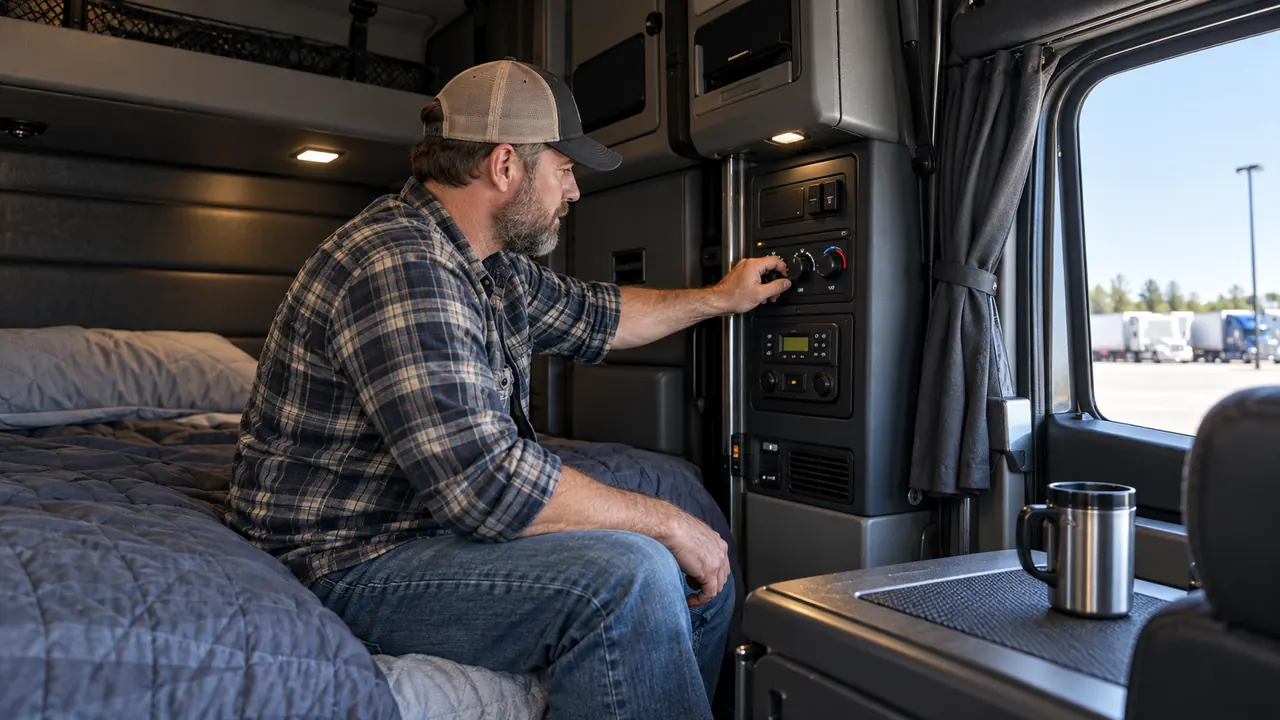
An auxiliary power unit, or APU, supplies some of the services a driver would otherwise obtain by idling the truck engine. Depending on the equipment, it may provide heating, air conditioning, and electric power. Battery-powered cab cooling can support engine-off operation for a limited period and may recharge while driving. A fuel-operated bunk heater provides heat but is not a substitute for summer cooling. Each option has a different purchase cost, maintenance need, noise level, and usable runtime.
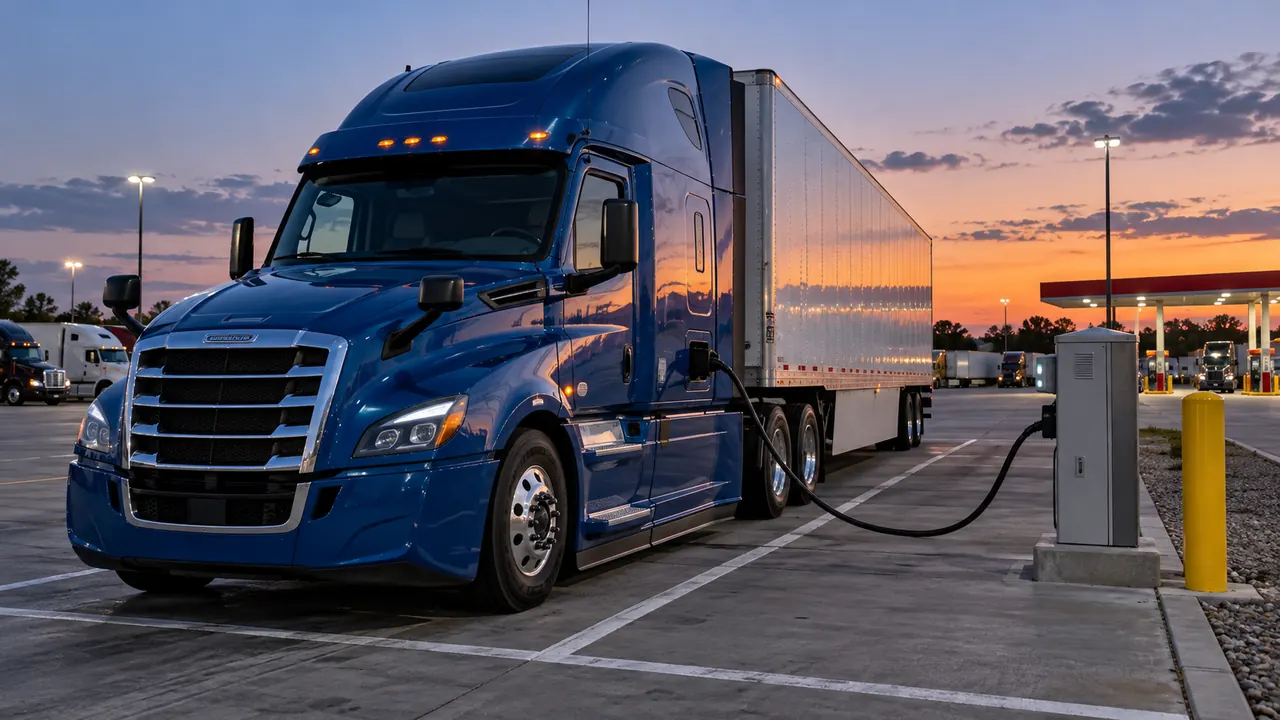
The EPA's overview of idle-reduction technologies explains these categories, including APUs, fuel-operated heaters, battery systems, thermal storage, and electrified parking. The DOE equipment guide adds that truck-stop electrification, often called shore power, can provide off-board electricity for cab needs where it is available. Availability remains uneven, so a driver cannot build a route around it without checking specific stops.
Before buying equipment, compare total ownership cost rather than sticker price alone. Ask how many hours per year it will replace main-engine idle, whether it can maintain a comfortable sleeper in local weather, what maintenance it needs, and how repairs will be handled on the road. A quiet system that saves fuel but fails on the hottest night is a poor fit. A fleet should ask drivers about real overnight performance, not just read a catalog specification.
Make Parking Part of the Energy Plan
A driver's choice of parking location affects both comfort and cost. When a route offers an electrified space, confirm that the pedestal is compatible with the truck and that the service is actually working before relying on it for the night. Check the price, parking rules, connector condition, and whether the space can be reserved. Follow the facility's safety instructions and keep cables clear of walking and driving paths.
For ordinary parking, think ahead about weather exposure and safe access. Do not take an illegal shoulder, blocked ramp, or unsuitable lot merely because it looks quiet or shaded. A legal truck stop or rest area with basic services is often a better place to manage a power problem. If equipment fails after parking, the driver should have a backup plan: another approved space, carrier support, or a safe use of the main engine as policy allows.
Idling rules also vary by state and locality. A driver should check the rules for the actual stop and note any exceptions that may apply to sleeper comfort, temperature, or equipment. A fleet policy does not override local law, and a general article cannot substitute for posted rules. When in doubt, ask dispatch or safety staff before settling in for the night.
Use Simple Engine-Off Habits During the Workday
Not all idle time happens during a rest period. A driver may leave the truck running while checking in, waiting for paperwork, buying food, or loading at a dock. Some of those situations require the engine or a powered system; many do not. Follow terminal and customer instructions, secure the truck, and switch off the main engine when it is safe and practical. Avoid repeated starts for a wait that will last only moments, but do not leave a truck idling automatically through a long delay.
Small habits work best when they are predictable. Before leaving the cab, check whether climate control is actually needed, whether the battery has enough charge for accessories, and whether the stop has a posted no-idling rule. Turn off unused lights and devices. If a refrigerated trailer is attached, remember that its unit has separate operating requirements; an idle plan for the tractor must never compromise cargo temperature.
Dispatchers can help by reducing uncertain wait time and sharing accurate appointment information. A driver waiting for an open dock cannot always predict whether the delay is five minutes or two hours. Better communication makes it easier to choose the right power and comfort option instead of keeping the main engine running as insurance against uncertainty.
Maintain the Systems That Make Engine-Off Rest Possible
Idle-reduction hardware only saves fuel when it works. Inspect power connections, filters, air intakes, batteries, and climate components on the manufacturer's schedule. Report weak cooling, unusual exhaust smells, repeated shutdowns, or a battery that does not hold charge. Do not bypass safety shutoffs. A reliable maintenance process matters as much as the original equipment purchase.
Also examine the cab itself. Failed door seals, damaged window shades, and air leaks make heating or cooling work harder. A clean condenser and sound insulation can help a properly designed system do its job. Drivers should report these small defects before a long trip into severe weather, when an engine-off option will be needed most.
A Practical Seven-Day Trial
Choose one week with a representative route. Record daily main-engine idle hours, parking locations, weather, sleep comfort, and any failures of the alternative system. Identify two or three stops where engine-off power is available and one legal backup. At the end of the week, compare the results with the baseline, but do not celebrate a lower idle number if the driver slept poorly or spent extra time hunting for a suitable space.
If the first trial works, repeat it in a different season. A cooling solution that performs well in September may not answer a January heating need. Use real fuel use, equipment cost, and driver feedback to decide whether to expand the plan. The best result is not zero idle hours at any cost. It is less avoidable idling while the driver remains rested, the truck stays ready, and every stop remains safe and legal.